

As an Amazon Associate we earn from qualifying purchases. If you buy through links on this page we may receive a commission at no extra cost to you. Product details come from Amazon listings and can change.
Worn ear pads are one of the most common reasons good headphones start to feel bad. The leather peels, the foam goes flat, the seal around your ear weakens, and bass and noise isolation suffer. This guide to the best replacement ear pads is for anyone who loves their current headphones and would rather refresh them than buy a new pair. It covers ten listings for popular noise-cancelling, on-ear and office headsets.
Each pick is explained in plain language: what the pad is made from, which headphone models the listing says it fits, what comes in the box, and what to watch for before you order. We also add a buyer guide that explains materials, sizing, installation, cleaning and how often pads need replacing, so you can choose even if your model is not listed here.
Compatibility matters more than anything else with ear pads, so always match your exact model name to the listing before you buy. Prices change often and vary by seller, so we do not quote them. Instead, every product card links to the live listing where you can check the current price, the list of supported models and the return terms.
Our top pick is the tear-proof protein leather replacement set for the QuietComfort 35 family, thanks to its reinforced seams and memory foam. For newer QuietComfort 45 style headphones, the SOULWIT set is the strongest match, and the DanYee pads suit commuters who want a thick, sweatproof seal.
Key Takeaways
Best Replacement Ear Pads at a Glance
| Product | Our score | |
|---|---|---|

Replacement Ear Pads for Bose QuietComfort QC 35Best Overall
|
9.2 / 10 | Check Price → |

SOULWIT Earpads for BoseBest for Newer Headsets
|
9.0 / 10 | Check Price → |
DanYee Noise-canceling Bose Earpads Replacement for Bose QC15 25Best for Commuters
|
9.0 / 10 | Check Price → |

Earpads for Bose QC35 & QC35 iiBest Install Kit
|
9.2 / 10 | Check Price → |

Earpads for Bose Quiet Comfort QC 35 / QC35Best for Older Models
|
9.2 / 10 | Check Price → |

HAOMUK Replacement Ear Pads for Skullcandy Crusher Wireless/Evo/ANC HeshBest for Skullcandy Crusher
|
9.4 / 10 | Check Price → |

Replacement Ear Pads for Anker Soundcore Life Q20/Q20i/Q20BT/Q20+/Life 2Best for Soundcore Life Q20
|
9.2 / 10 | Check Price → |

Replacement for Beats Studio 3 Replacement Ear Pads BlackBest for Beats Studio 3
|
9.2 / 10 | Check Price → |

4-Pack Replacement Ear Pads Compatible with JBL Tune 510BTBest Multi-Pack
|
9.0 / 10 | Check Price → |

Ear Cushions Foam Replacement for Supra Plus Encore andBest for Office Headsets
|
8.4 / 10 | Check Price → |
How We Chose the Best Replacement Ear Pads
This is a research based guide, not a lab comparison. We built the list from the details each listing publishes: the supported headphone models, the pad materials, the included tools, the pack size and the seller’s own description of fit and comfort. We then matched those facts against general knowledge of how ear pad foam, synthetic leather and seals affect comfort, isolation and sound.
Because replacement pads are mostly about fit and materials, we weighted compatibility range, durability features such as reinforced seams, ease of installation and value per pair. Each pick also carries an editorial score out of 10 on the site, which reflects how well the listing’s stated features fit its intended use. Treat it as a guide, and confirm your model before ordering.
In-Depth Reviews
1Replacement Ear Pads for Bose QuietComfort QC 35
This replacement set takes the top spot because it speaks directly to the most common failure of aftermarket pads: splitting seams. The listing describes a hybrid seaming technique, improved since early 2024, meant to stop the tearing that cheaper copies suffer from. It fits the Bose QuietComfort 35 and 35 II, plus the QC25, QC15 and QC2, and also lists SoundTrue and SoundLink around-ear and AE2 headphones, which makes it a flexible buy for owners of several generations. Buyers who want a repair that lasts longer than a season will find this the most reassuring listing in the whole group.
The pads combine upgraded protein leather with custom memory foam. Protein leather is a soft synthetic skin that mimics the feel of real leather, and the listing says this version resists peeling and wear better than before. Memory foam slowly rebounds when you press it, so it shapes itself around the ear and glasses arms, which helps the cup form a seal. The seller states that the pads are engineered to keep the original sound profile. The seams of the original cushion are usually the first place a cover gives up, so attention to that detail is welcome.
This is the pad for people who use their headphones hard. The listing mentions daily use, workouts, flights and outdoor work, which suggests it is aimed at wear and tear rather than light desk use. Commuters, frequent flyers and gym users who sweat into their cushions are the natural audience. Because it asks for no tools or special skills, it also suits first timers who have never opened an ear cup. Memory foam like this keeps pressure off the ear bones, which matters when you wear the headphones through a full working day.
Check the model name on your headphones before ordering, because the listing covers a large family but not every Bose design. Protein leather still wears down over a year or two, so wipe the surface with a slightly damp cloth after sweaty sessions and let it dry away from direct heat. If the old pads were glued, peel off residue gently so the new pads sit flat and fully seal. Treat the pads as a consumable part, and plan to swap them again when the cover starts to look shiny or thin.
Reinforced seaming against splitting
Wide family compatibility
Soft memory foam fill
Installs without tools
Check exact model fit first
Synthetic leather still ages
2SOULWIT Earpads for Bose
SOULWIT earns a place because it covers a different generation of headphones from most pads on this list. The listing says it is compatible with the Bose QuietComfort 45, QuietComfort SC, QuietComfort SE and QuietComfort Wireless over-ear headphones. Owners of those newer models often struggle to find pads, since many popular sets only cover the older QC35 era, so a dedicated option is useful to have. That specific focus on one headphone generation is a rare strength in a market full of vague, one size fits all claims.
Build details are where this set stands out. The seller says it adds stitching and strong glue on the inside seams of each earpad to prevent splitting, and pairs high-density foam with softer protein leather so the cushion keeps its shape instead of going flat. Inside the box you get the earpads, a pair of scrims, a user guide and a plastic stick, which is the small tool that helps lift the old pads out of their clips. The glued and stitched edges should help the cover keep its shape when you pull the headphones on and off every day.
This set suits owners of recent noise-cancelling headphones whose cushions have started to flake or compress. If your old pads leave a gap that lets in traffic noise or makes bass feel thin, a fresh seal can bring the sound closer to what you remember. Students, office workers and travellers who wear their headphones for hours are the people most likely to notice the difference. A fresh seal also helps the active noise cancelling circuits, since less outside sound reaches the microphones to begin with.
Read the listing’s own warning to confirm your headset model before buying, because the newer headphones use a different clip design from older ones. The seller says installation usually takes about five minutes, but go slowly with the plastic stick so you do not scratch the ear cup. Keep the old pads until the new ones are seated, in case you need to double check the orientation. Take a clear photo of the clip layout beforehand, because it is easy to forget how the tabs line up once they are loose.
Covers newer QuietComfort models
Stitched and glued inner seams
Scrims and stick supplied
Softer protein leather
Not for older QC35 models
Needs a careful clip fit
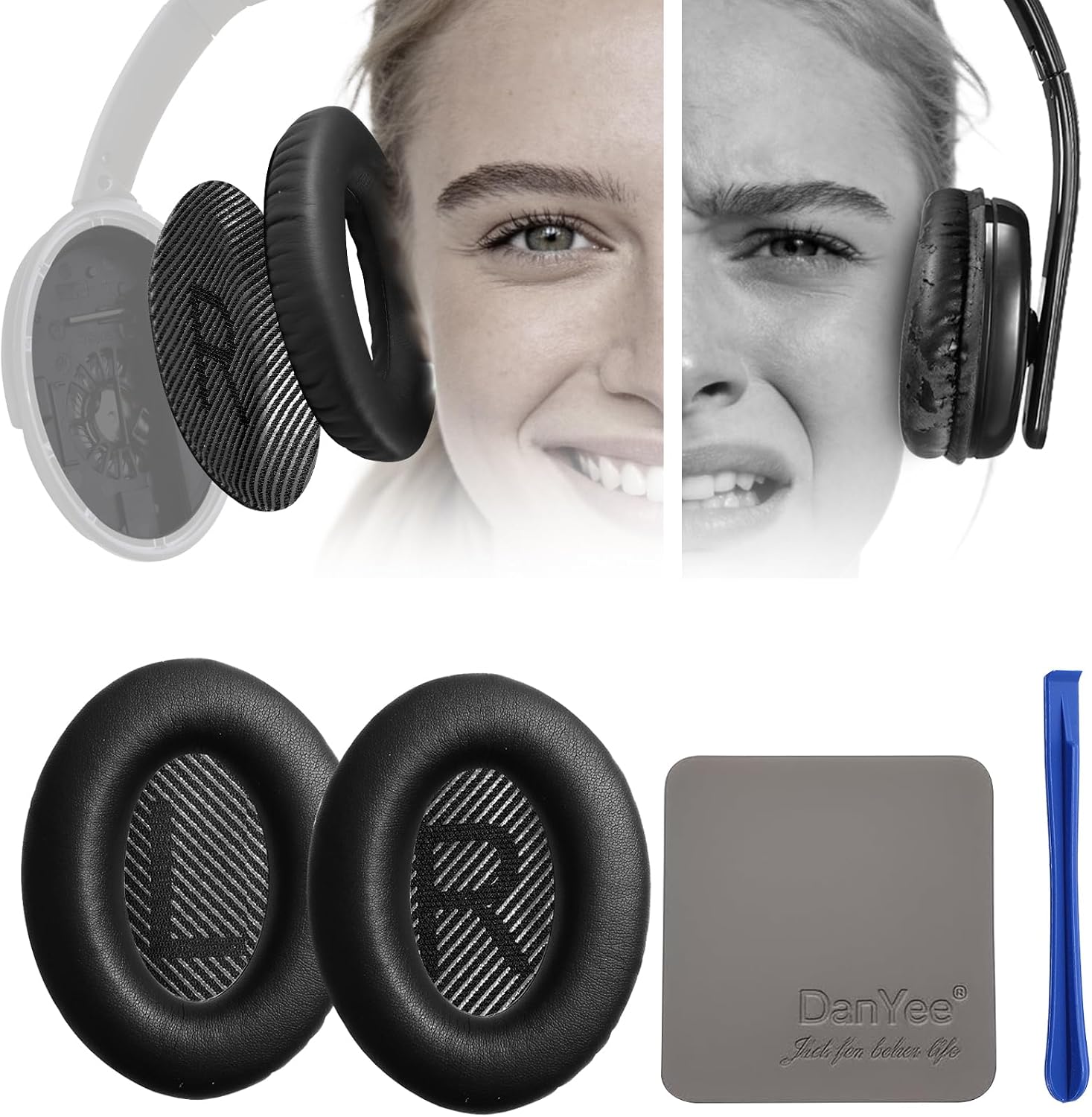
3DanYee Noise-canceling Bose Earpads Replacement for Bose QC15 25
DanYee markets this set squarely at business travellers, commuters and students, and the listing wording makes the focus clear: restoring the seal that makes noise-cancelling headphones work. It lists compatibility with the QC35, QC35 II, QC2, QC15, QC25, AE2 variants, and the SoundTrue and SoundLink around-ear models. That puts it in the same family as our top pick, with a different emphasis on comfort and sweat resistance. Comfort and seal are the two promises here, and both are easy to understand without any technical background.
The pads use sweatproof protein leather with thick, slow rebound memory foam. According to the seller, the extra thickness and softer cover improve seal, comfort and stability compared with worn original cushions, and reduce pressure during long wear. A good seal matters because active noise cancelling works best when outside sound is blocked first, leaving the electronics less work to do. Sweat resistance is useful on a crowded summer train or a walk to campus, where heat builds up quickly inside the cup.
The best fit for this pad is a daily commute on a train or bus, where engine rumble and chatter constantly attack the seal. Business travellers wearing headphones through a long flight, and students who study in noisy libraries or cafes, would also benefit from the softer cushioning. The listing says installation takes about five minutes and includes tools, a printed guide and a video reachable by scanning a QR code. The presence of a video guide is a small bonus for anyone who finds printed diagrams hard to follow.
Thicker pads can change how the headphones sit, so people with very small heads may feel the cups sit slightly further from the ear than before. The listing quotes an independent evaluation and a large owner base, but those claims come from the seller, so treat them as marketing. Let the foam relax for a day after fitting, then judge the seal with your favourite bass heavy track at a moderate, safe volume. Giving the cushions a short break from the headphones between uses lets the foam recover its shape faster.
Thick memory foam cushion
Sweatproof cover material
Video installation guide
Broad Bose family fit
Thicker pads alter the fit
Seller claims need caution
4Earpads for Bose QC35 & QC35 ii
This black earpad set is the simplest kit on the list to understand. The listing names the QC2, QC15, QC25, QC35 and QC35 II, along with the AE2 family and the SoundTrue and SoundLink around-ear generations. Everything you need is bundled, so it is a sensible pick for someone who wants a plain black replacement that matches the original look without extra styling. Straightforward kits like this reward buyers who simply want the job done without comparing a dozen fancy options.
Inside the package are the earpads, a pair of scrims, a user guide and a plastic stick. Scrims are thin fabric layers that sit between the foam and the speaker driver, protecting it from dust and letting the sound pass through evenly. The plastic stick helps pry the old pads from their rim without metal tools that could scratch the cups. The pad itself uses high-density foam wrapped in high-grade protein leather. High-density foam holds its shape longer than soft packing foam, though it can feel a touch firmer on the first day.
The seller says the build is designed to seal around your ears and deliver strong noise isolation with enhanced bass. A snug seal does traps low frequencies near the ear, which is why bass often fades when old pads go loose. This kit is good for people who have never replaced pads and like having every part in one box, from the cover to the guide to the little pry tool. It is a good fit for a weekend project, and a short spare half hour should be plenty for most people.
The listing says installation usually takes around five minutes, so set aside a quiet table and a bit of patience rather than rushing. Keep the scrims flat and clean when fitting, because a crumpled one can cause rattles or muffle the highs. If the finished pads do not seat properly, the seller invites contact for replacements, so save your order details and the packaging for a few weeks. When the kit arrives, check that all parts are present before you start pulling the old pads off the headphones.
Complete kit in the box
Scrims included
Plain black original look
Wide QC family fit
No video guide mentioned
Plain styling only
5Earpads for Bose Quiet Comfort QC 35 / QC35
The Link Dream kit casts the widest net across older Bose headphones. The listing names QuietComfort 35 and 35 II, QuietComfort 25, 15 and 2, the AE2, AE2i and AE2w models, and several SoundTrue and SoundLink around-ear versions. If you own a ten year old pair that you refuse to give up, this is one of the more thorough compatibility lists we found among the listings. Long compatibility lists matter most when the model name is hard to read, because the odds of a match go up.
The pads are described as soft protein leather over foam, designed to match the original shape. The seller says the memory foam cushion blocks the entrance of outside sound and keeps the headphone’s original sound, which reflects how a snug cup traps bass and reduces leaks. Installation is described as quick: remove the old pads, fit the new ones and press them in, and the seller states they will not fall off easily. Soft cushions can bring back the relaxed feel that made the headphones enjoyable when they were new.
This listing makes sense for people who want to restore an older pair rather than upgrade. A student with a hand-me-down set, a home office worker who wears headphones all day, or a collector with an AE2 pair will all benefit from fresh, soft cushions. The all day comfort claim in the listing relies on foam that does not swell or press, which is exactly the problem tired original pads suffer from. Anyone who keeps a pair of headphones for a decade is the sort of buyer this kind of kit is made for.
Older headphones can have brittle plastic around the pad rim, so work slowly when removing the old cushions and avoid prying near hairline cracks. The listing promises a reply within twenty four hours if you have a problem, though response times depend on the seller. Always take photographs of how the old pad sits before removing it, so you can match the position of each cup exactly. Store the old pads in a drawer for a while, since they can serve as a pattern if you ever need to compare sizes.
Very wide older model list
Soft leather and foam
Quick seller contact promised
Easy fitting described
Older rims can be brittle
Basic kit contents
6HAOMUK Replacement Ear Pads for Skullcandy Crusher Wireless/Evo/ANC Hesh
HAOMUK targets owners of Skullcandy Crusher and Hesh headphones, a family that is surprisingly short on dedicated replacement pads. The listing says it fits Crusher Wireless, Crusher Evo Wireless, Crusher ANC, Hesh 3 Wireless, Hesh Evo and Hesh ANC, and it also lists special editions such as Crusher Evo Collina Strada and Crusher Evo Budweiser Limited Edition. Few brands have such a clear community of fans, so a model specific pad listing is a welcome find for them.
The cushions are made from memory foam and protein leather, and the seller states they do not press on the ears. They are described as the same size as the original pads and meant to fit tightly. The tight fit matters here because Crusher headphones are known for punchy bass, and a loose pad lets that bass escape. Installation is also described as simple, with no tools required. Dense foam also helps keep the cup from rattling when the headphones deliver deep bass at higher levels.
This pad suits fans of bass heavy music, gamers who play long sessions and teenagers who wear their Skullcandy headphones everywhere. If the original pads have cracked, flaked into your hair or started to smell, a new pair gives the headphones a fresh look and a comfortable feel. It is also a sensible option for a second hand pair bought at a bargain. The limited edition names in the compatibility list suggest the pad shape matches across the whole Crusher range.
Match the exact model name against the listing, since the seller specifically warns buyers to confirm their headphone model first. The Crusher series may include haptic bass features inside the cups, so keep fingers and tools away from internal parts during installation. Once fitted, press around the entire rim to check the seal, and keep listening volume sensible, because stronger bass can encourage turning the level up. Wiping the new cover with a soft cloth before first use removes dust picked up in the packing process.
Fits many Crusher and Hesh models
Special editions listed
Tool-free fitting
Soft memory foam
Model check is essential
Limited to one brand family
7Replacement Ear Pads for Anker Soundcore Life Q20/Q20i/Q20BT/Q20+/Life 2
Anker Soundcore Life Q20 headphones are popular on a budget, which makes a replacement pad listing like this one a smart way to extend their life. The seller says the pads fit only the Soundcore Life 2, Q20, Q20i, Q20BT and Q20+ headphones, and it asks buyers to confirm the model before ordering. That clear, narrow scope helps avoid fit mistakes. Low cost headphones deserve a repair route too, because many are still in good working order when the cushions fail.
The cushions are described as high quality memory foam and protein leather with added thickness so they do not press on the ears. The seller says they are the same size as the original and fit tightly, which is what you want from a replacement part. The package includes opening picks and a triangle opener, small tools that help release the old pad from its clips without damaging the cup. A matching size is key, since a thin cup edge can crack if a pad is forced into place with too much pressure.
If you own a pair of Q20 headphones that you use for commuting, studying or flights, this set is an affordable way to bring back the comfort of a new pair. Worn pads are one of the first parts of a headphone to give up, and replacing them costs far less than a new set. The seller also offers pads for other brands, which may help if you own more than one pair. Because the pads come from a seller who offers many sizes, it is easy to look for matching pads for other pairs.
Added thickness is a double-edged feature: it can improve comfort for larger ears but may feel less snug for people who liked the slim original. Use the opening picks gently, because the cup edge on lower cost headphones is usually thin plastic. After installation, give the pads a day or two to settle before judging comfort, and wipe them occasionally to prevent skin oils from damaging the cover. A soft brush helps remove lint from the rim of the cup before the new pad goes on.
Clear Soundcore model scope
Opening tools included
Extra thickness for comfort
Same size as originals
Fits only the listed models
Thicker feel not for everyone
8Replacement for Beats Studio 3 Replacement Ear Pads Black
Beats Studio headphones are stylish and widely owned, and their pads are among the most common parts to wear out. This listing is built for the Beats Studio 3 wired and wireless models and also names the Studio 2 Wireless (model B0501) and Studio 2 wired (model B0500). That gives owners of two generations a single, clearly labelled option instead of guesswork. A clean cover can also make a pair of used headphones feel far more hygienic, which matters if you bought them second hand.
The cushions are made from memory foam that the seller calls breathable, soft and lightweight, with industrial grade adhesive meant to hold the pad in place for a long time. In the box you get a pair of pads, an instruction booklet and a plastic triangle opener. The booklet is worth reading first, because Beats cups are designed differently from many other over-ear headphones. Studio style cups with a firm clip can resist at first, so apply even pressure rather than pulling on one side.
This set suits anyone who wants to keep a favourite fashion forward pair going, whether you bought them for the gym, school or commuting. Skin contact and sweat eat into the cover over time, and flaking pads can look untidy and feel scratchy. Replacing them restores comfort and gives the headphones a cleaner appearance without the cost of buying a whole new pair. Owners often choose the style because they love its bass tuning, and a fresh seal helps preserve that character.
The listing is explicit that the pads do not fit Beats Studio Pro, Monster Studio or Solo on-ear models, so read your headphone’s model details before ordering. The adhesive is strong, which is good for security but means you should line the pad up carefully before pressing it down. Take your time, avoid pulling on any wiring near the cup, and keep the old pads until you are sure the fit is correct. Keep the booklet in a safe place in case you need to repeat the process in a year or two.
Two Studio generations covered
Instruction booklet and opener
Breathable memory foam
Strong adhesive backing
Not for Studio Pro or Solo
Adhesive needs careful alignment
94-Pack Replacement Ear Pads Compatible with JBL Tune 510BT
This listing stands out because it is the only four-pack here, giving you two full pairs of pads for a single order. It names JBL Tune 510BT, 520BT, 450BT, 460BT and 500BT, along with Junior 320, 320BT, JR300BT and 310BT. The seller adds that it fits most 65 to 70mm on-ear headphones, though you should compare your own measurements first. A spare set of pads is useful because it keeps a favourite pair of headphones in rotation without long waiting times.
The set is described as slightly larger than the original earpads, with thick, cloud-like cushions covered in wrinkled leather. The seller says the PU material is durable and easy to maintain and that the sealing design isolates outside noise. A spare pair means you can rotate pads while one set is being cleaned, or keep a clean pair ready for after a long season of heavy use. The detail that these pads run slightly larger helps people with bigger ears who find original on-ear cushions pinch.
Parents of kids who use Junior models, gamers who play for hours and students who wear headphones daily are good candidates for this multi-pack. Kids tend to be rough on their gear, so spare pads are a practical safeguard. If you are a parent, remember that padding and fit do not protect hearing, so encourage low volume and supervise how long the headphones are worn. Kids headphones often take a lot of abuse, so extra pads cost little compared with a replacement pair.
The seller says the pads are slightly larger and the technique to fit them takes a moment to learn, so watch the included installation video before you start. On-ear pads rest directly on the ear rather than around it, so extra thickness can feel comfortable but also warmer in summer. Wash your hands before handling the foam, and store the spare pair in a clean bag to keep dust away. When removing the old pads, take care not to tug on the thin plastic tabs that hold the cushions in place.
Four pads, two full pairs
Covers Tune and Junior lines
Thicker, softer cushion
Installation video included
Fit takes some technique
On-ear pads feel warm
10Ear Cushions Foam Replacement for Supra Plus Encore and
Not every pair of headphones is a premium music model, and this listing proves it. These foam cushions are designed for standard size office telephone headsets, naming the Supra Plus and Encore along with the H251, H251N, H261, H261N, H351, H351N, H361 and H361N series. The pack contains five pairs, or ten cushions, which is the largest quantity in this guide. Basic foam covers are not glamorous, but they are the practical solution for headsets that see hours of daily use.
The seller describes the foam as high elasticity, light and soft, and says the cushions measure 50mm or two inches, suitable for headphones, walkie talkies and headsets. The listing also says the covers help reduce noise and improve clarity of music. Foam cushions like these slide over the speaker rather than clipping into a cup, so there is no tool, adhesive or pry stick involved. Because the foam is so light, it adds almost nothing to the weight of the headset on your head.
This pack makes sense for call centres, home offices, schools and shared workspaces where headsets are passed between people. Fresh disposable covers are a simple hygiene measure, since the listing mentions replacing unhygienic, worn or unusable pads. Anyone with an old pair of wired headphones that use a similar size foam can also check the dimension and give them a cheerful second life. Offices that buy in bulk will appreciate the size of the pack, which can cover a whole team for months.
Measure your speaker before buying, because the fit relies on the foam matching a 50mm pad size and a loose cover will slip during use. Foam covers do not provide the thick seal of a large memory foam cushion, so expect modest isolation in a noisy room. Replace them regularly in shared environments, and keep a spare pair in a drawer, because thin foam wears out faster than leather. Label the box with the headset model so the next person who needs spare pads can find the right size quickly.
Five pairs in the pack
Useful for shared headsets
Slip-on, no tools
Light and soft foam
Thin foam wears quickly
Modest noise isolation
How to Choose the Best Replacement Ear Pads
Why ear pads wear out
Ear pads live a hard life. They press against skin for hours, absorb sweat, hair oil and sunscreen, and get squeezed in bags and pockets. Over time the foam compresses and the synthetic cover starts to crack, peel and flake. Heat speeds this up, which is why a headset left on a sunny dashboard or a warm desk often wears out faster. Knowing why wear happens helps you pick materials that last longer in your own conditions.
Typical wear shows up as a gritty or sticky surface, black flakes on your ears and a gap at the edge of the cup. Many people only notice the sound change after replacing the pads, because the loss of bass and isolation happens slowly. If your headphones feel less comfortable or louder noise leaks in, the pads are the first part to inspect. Catching the problem early also saves the speaker cover underneath from dust and moisture.
How replacement pads affect sound
Headphones are tuned with the original pad in mind. The foam thickness, the pad’s inside shape and the way it seals against the head all shape bass response, and a changed pad can alter the sound slightly. A snug seal keeps low frequencies near your ear, while a leaky seal makes music sound thinner and lets background noise creep in. Small changes in pad shape can also change how much air sits inside the cup.
For that reason, most good replacement listings copy the original pad’s size and depth. Thicker pads can feel plusher but may move the driver a little farther from the ear, which some listeners notice as a softer presentation. If you love the original sound, pick a listing that says it keeps the original profile, and judge it at a safe, moderate volume. That is why pads that match the original usually give the most natural result.
Protein leather, velour and foam explained
Protein leather is a synthetic material, usually polyurethane, with a soft finish designed to feel like real leather. It seals well, resists sweat and wipes clean, but it can feel warm and may peel after a long time. Wrinkled or textured covers hide small marks, while smoother finishes look closer to the original pads of many headphones. Cover finish matters for comfort in hot weather, so think about where you wear your headphones most.
Memory foam is the cushion inside. It compresses slowly and springs back slowly, which helps it mould around your ear and glasses frames. Higher density foam keeps its shape longer but can feel firmer at first. Velour pads, common on studio headphones, breathe better than leather but isolate less, so choose by how you listen. Covers that feel slightly soft to the touch are often kinder to the skin over long sessions.
Checking compatibility before you buy
Compatibility is the single most important step. Headphone names are confusing, and a single brand may release several models with similar looks but different clip systems. Find the exact model name, often printed on the inside of the headband or the cup, and compare it with the full list in the listing, including any model numbers or generation names. A few minutes of checking now saves the hassle of returns and repackaging later on.
Read the warnings too. Some sellers state clearly that their pads do not fit certain sibling models. If the listing gives pad dimensions, measure the outside of your cup and the old pad. When in doubt, send the seller a message with your model name before ordering, and check that the return policy covers a wrong fit. Keeping a note of your model on your phone makes future pad purchases much easier.
Over-ear versus on-ear pad sizing
Over-ear pads wrap around the ear and sit against the skin of your head, while on-ear pads rest on the ear itself. That difference changes the cup shape, the pad size and the feel. Over-ear cushions are usually larger and deeper, giving more room for your ears, while on-ear versions are smaller and shallower. Remember that the pad sits in a different place on your head depending on the headphone type.
When a listing mentions measurements, such as a range of 65 to 70mm for on-ear sizes or a 50mm foam cover, take it seriously. A pad that is a few millimetres too big may bulge or wrinkle, and one that is too small leaves a gap. Use a ruler on your old pad before ordering, especially for generic sizes. A good sizing check is more reliable than trusting a general label such as medium or large.
Installing ear pads step by step
Start by finding a clean, well lit surface and laying out the new pads, any scrims and the tools in the box. Note how the old pad is oriented, and take a quick photograph. Then lift the old pad from the edge, working slowly around the rim with the plastic tool or opener until the clips release. Avoid metal tools that could scratch the cup. Patience is the key skill for this job, and a calm approach usually leads to a clean result.
Clean the rim, peel off any adhesive residue and check that the speaker cover is intact. Place the new pad so its tabs line up with the notches, press at one point and work around the circle until it sits flat. Check the left and right pads are on the correct sides, and gently wiggle the pad to confirm it is secure. Never force a pad that resists, because a stuck clip usually means something is misaligned.
Cleaning pads to make them last
Regular cleaning slows wear. Wipe synthetic leather pads with a soft cloth that is only slightly damp, then dry them naturally. Avoid soaking, strong solvents and alcohol wipes, because they can dry out the cover and make it crack sooner. Never apply liquid directly onto the pad, as moisture could seep toward the speaker underneath. A short cleaning routine each week is easy to build into your day and pays off over the months.
Foam covers and velour pads can usually be brushed or lightly dabbed. After sweaty sessions, let the headphones air out before putting them in a case. If you share headphones, wipe the pads between users. A spare pair, like the multi-pack in this guide, lets you rotate pads while one set dries and rests. Clean hands also help, because skin oils transfer to the cover and speed up the wear.
How often to replace ear pads
There is no fixed schedule, since lifespan depends on climate, sweat and daily hours of use. Many people find that synthetic leather pads last roughly one to three years with regular wear. Signs it is time include peeling cover, flattened foam, a loose fit, creaking noises and a weaker bass response. Heavy daily use will shorten the lifespan, while occasional use can stretch it considerably.
Replace pads before the cover fully tears, because exposed foam crumbles and can reach the driver cover. If you spot small cracks, a replacement set costs far less than a new headphone. Keep a spare in a drawer if your headphones are discontinued, since sellers may stop listing pads for older models over time. Tracking the date of each replacement helps you spot how long your pads last in your own habits.
Comfort tips for glasses wearers and long sessions
Glasses frames press into the pad and can break the seal, creating a small leak near the temple. Softer, slow rebound memory foam can mould around the arms of your glasses and help reduce this effect. Thicker pads give the frames more space to sink in, though they can alter how the headphones sit on your head. Small adjustments to fit often matter more than any expensive upgrade for comfort.
For long sessions, take short breaks, adjust the headband so the clamp is not too tight and avoid very warm rooms. Breathable fabric covers feel cooler than leather, and leather isolates better. Choose the material that matches your priority, and keep the volume low enough to talk comfortably over the music. A cool, well ventilated room also helps a lot when you wear closed headphones for hours.
Spotting low quality pads and seller red flags
Low quality pads often show thin foam, uneven stitching, loose threads and covers that feel plasticky or sticky. Product photos that show visible gaps at the seams are a warning. Listings that do not name the headphone model, or that claim to fit everything, are risky, because pad shape differs significantly between models. A little scepticism protects you from listings that promise miracle sound improvements.
Look for sellers that describe the materials clearly, list the exact models, include installation tools and offer a way to contact them. Be wary of big claims about improving sound quality, since pads can only restore or slightly shift the sound. Keep your packaging and order details until the pads have been fitted and checked. Clear photos and honest, detailed descriptions are usually the mark of a more careful seller.
When to replace the headphones instead
Pads are a great fix when the cushions are the only worn part, but they cannot solve everything. If the headband is cracked, the battery no longer holds a charge, a driver is distorted or the hinges are loose, new pads will not cure the problem. In those cases, the headphones themselves may be at the end of their useful life. Being honest about the condition of your headphones can save money and frustration.
A simple check is to listen at a moderate level with the pads pressed lightly against your ears. If the sound is clean and full, the electronics are fine and fresh pads are worth buying. If you hear crackling, one sided sound or constant dropouts, plan for a full replacement instead. Fresh pads on a failing headphone are a cost that brings no lasting benefit.
Frequently Asked Questions
How do I know which ear pads fit my headphones?
Find the exact model name on your headphones, usually inside the headband or cup, and compare it with the full list in the listing. Read any warnings about models that do not fit, and message the seller if you are unsure.
Do replacement ear pads change the sound?
They can slightly. A fresh pad restores a good seal, which brings back bass and isolation. Pads that are thicker or a different shape can nudge the sound a little, so choose listings that copy the original size.
Are protein leather pads as good as real leather?
Protein leather is a synthetic material that feels soft and wipes clean easily. It seals well but can feel warm and may peel after long use, which is why reinforced seams and regular cleaning matter.
Is it hard to install replacement ear pads?
Most listings describe a quick job of about five minutes. Lift the old pad with a plastic tool, clean the rim, line up the tabs of the new pad and press it down evenly all the way around.
How often should I replace my ear pads?
There is no fixed rule, but many people replace synthetic leather pads every one to three years. Replace them sooner if the cover peels, the foam goes flat or noise starts to leak in around the cup.
Can I wash replacement ear pads?
Wipe them with a lightly damp cloth and let them air dry. Do not soak them or use strong solvents, because liquid can reach the speaker and harsh cleaners can crack the cover or dry it out.
Will thicker pads feel more comfortable?
Often yes, because there is more foam between the cup and your head. But thicker pads can change how the headphones sit and may feel warmer, so consider your ear size and how long you wear them.
Do replacement pads improve noise cancelling?
They do not add noise cancelling, but they can restore the seal that active noise cancelling depends on. A worn pad that leaks sound makes the system work harder, so a fresh pad can help bring performance back.
Are ear pads safe for kids headphones?
Pads only affect fit and comfort, not hearing safety. For children, keep the volume low, take breaks, supervise use and choose pads that fit snugly without pressing hard on the ears.
Should I buy a multi-pack of ear pads?
A multi-pack is useful if you want to rotate pads, share headphones or keep a clean spare. For a single personal pair, one set is usually enough, and a pack is worth it only if the extra pads are useful to you.
The Bottom Line
The right ear pads can make an old pair of headphones feel new again, and the tear-proof set for the QuietComfort 35 family is our top pick for its reinforced seams, soft memory foam and flexible model coverage. If you own a newer headset or another brand, the other nine listings cover a wide range of popular models.
Before you buy, match your exact headphone model with the listing, check what is in the box and look at the live price and return terms. Fit the pads carefully, keep them clean and listen at a safe volume. A good pair of pads is a small repair that often brings back comfort, bass and isolation.
Updated for the 2027 buying season. Amazon listings and availability change often, so check the product page for current details.
Write Your Review
No reviews yet. Be the first to share your experience!