

As an Amazon Associate we earn from qualifying purchases. If you buy through links on this page we may receive a commission at no extra cost to you. Product details come from Amazon listings and can change.
If you are searching for the best open ear headphones, this guide is built to save you time. Open ear designs leave your ear canals uncovered, so you keep hearing traffic, coworkers and your own footsteps while music or a podcast plays. Some models use bone conduction through the cheekbones, while others use tiny speakers that sit just outside the ear on a hook or clip.
We cover ten picks, from a bone conduction sport headset to clip-on earbuds and hook style designs with long case battery life. The guide is written for commuters, runners, cyclists, office workers and anyone who finds in-ear tips uncomfortable. Each entry explains what the listing promises, how the technology works and where the trade-offs sit.
Prices change often and sellers run deals without notice, so we do not print them here. Instead, every pick links to a live listing where you can check the current cost, colors and what is included in the box. Read the buying guide below the picks to learn what matters most before you decide.
Our top pick is the SHOKZ OpenRun Pro, a bone conduction headset with a titanium frame, ten hours of playback and a bud-free fit made for workouts. For clip-on comfort, look at the TOZO OpenEarRing or the Baseus Inspire XC1. If you want hook style earbuds with multipoint pairing and an app, the Nothing Ear (Open) is a strong alternative.
Key Takeaways
Best Open Ear Headphones at a Glance
| Product | Our score | |
|---|---|---|

SHOKZ OpenRun ProBest Overall
|
9.0 / 10 | Check Price → |

Soundcore V20i by Anker Open Ear EarbudsBest for Bass
|
8.8 / 10 | Check Price → |

Open Ear Wireless Earbuds Bluetooth HeadphonesBest Case Battery
|
9.6 / 10 | Check Price → |
| 8.6 / 10 | Check Price → | |

PSIER Bone Conduction HeadphonesBest Bone Conduction Value
|
8.4 / 10 | Check Price → |

Ultra Open Ear HeadphonesBest for Long Days
|
9.2 / 10 | Check Price → |

OHAYO Open Ear HeadphonesBest Dual Driver Design
|
8.6 / 10 | Check Price → |
CXK Bone Conduction HeadphonesBest for Wet Weather
|
8.8 / 10 | Check Price → |

Baseus Inspire XC1 Open Ear Clip-On EarbudsBest for Calls
|
8.6 / 10 | Check Price → |

Nothing EarBest Smart Features
|
8.4 / 10 | Check Price → |
How We Chose the Best Open Ear Headphones
This is a research based guide. We read each listing closely, compared the stated specs and features, and thought about which use cases each design fits best, such as running, cycling, commuting, office calls or relaxed listening at home. We also used general knowledge of how bone conduction, hook style and clip-on open ear products work to explain what the listed claims mean in everyday use.
This is not a lab comparison, and we do not run measurements or publish sound graphs. Claims such as battery hours, driver sizes and protection levels come from the seller listings, so treat them as manufacturer statements. Each pick also carries an editorial score out of 10, shown separately on the page, which reflects how well the listed features fit the category and how clearly the product is described.
In-Depth Reviews
1SHOKZ OpenRun Pro
The SHOKZ OpenRun Pro earns the top spot because it is the clearest example of a purpose-built open ear sport headset. Instead of earbuds, it uses a bud-free design that rests on the cheekbones and leaves both ear canals completely open. The listing calls it the best fit yet from the brand and says it includes a headband accessory. For shoppers who want a dependable first open ear pair, that focused design is a strong starting point. Its focus on one job keeps the whole package easy to understand for new buyers.
Sound reaches you through bone conduction, meaning small transducers vibrate against the bone in front of each ear. The listing names its ninth generation bone conduction technology and a feature called TurboPitch, which it links to clear sound, strong volume and richer bass. A built-in microphone handles calls, and the seller says the headset pairs with Android, iOS, Windows and other Bluetooth devices, so setup should be simple across most gadgets. Setup on a phone, laptop or tablet should take only a few minutes from the box.
This model suits runners, gym regulars and cyclists who need to hear cars, bikes and announcements while they move. The lightweight wraparound titanium frame is described as stable during intense training, and the sweat-resistant build targets hard workouts. Commuters who walk busy streets and office workers who like a pressure-free fit can also benefit from the same open design without any ear tips pressing inward. Anyone who shares a household with kids or pets may value that situational awareness too.
Be realistic about what bone conduction can do. Bass will feel lighter than a sealed over-ear headset, and in a noisy place you may be tempted to raise the volume, so keep it at a comfortable level. The listing gives ten hours of playback and says a five minute quick charge returns up to one and a half hours, which is handy before a morning run. Check the listing for the exact charging accessory and fit details. Charging habits matter, so top up after a ride instead of waiting for the battery to empty.
Bud-free bone conduction design
Wraparound titanium frame for a stable fit
Ten hours of music and calls listed
Quick charge for short top-ups
Bass is lighter than sealed headsets
Needs care with volume in noisy places
2Soundcore V20i by Anker Open Ear Earbuds
Soundcore V20i by Anker makes the list as the pick for people who want open ear comfort without giving up a punchy sound signature. These are true wireless open ear earbuds, so each side is a separate piece that sits near the ear rather than inside it. The listing leans on all-day comfort and a non-intrusive feel, which makes it appealing for shoppers who have never worn an open design before. That mix of comfort and bass makes it a friendly entry into the open ear category.
The standout spec is the 16mm driver in each earbud, described with a titanium-coated dome and the brand’s own BassUp technology. A large driver can move more air, which usually helps low frequencies, and this is exactly where open designs tend to struggle. Four adjustable positions let you rotate each earbud to find a stable angle, and customizable lights that sync with the music add a playful extra. The ability to rotate each earbud also helps when one ear feels different from the other.
Think of this model for city walks, casual workouts, desk work and long days when you want to stay aware of the world. The listing highlights situational awareness for urban life and outdoor ventures. Teenagers and students who like a bit of visual flair may enjoy the light effects, though anyone who wants a quiet, plain look might switch that feature off in the app, if one is offered. Weekend errands and park strolls are further settings where it should feel natural.
Keep expectations sensible. An open design lets outside noise in, so loud streets will mask quiet passages, and turning up the volume to compensate is not wise for your ears. Because the listing does not state a water protection level or battery hours in the text we reviewed, check the live page before you buy if sweat or all-day playtime matters. Try each of the four positions before settling on one. Browse the full product page for accessories and the exact charging details.
Large 16mm drivers aimed at bass
Four adjustable positions for fit
Four mics with AI call clean-up
Tune-synced lights for fun
Battery and water details need a check
Open fit still lets noise in
3Open Ear Wireless Earbuds Bluetooth Headphones
Open Ear Wireless Earbuds Bluetooth Headphones is a generic no-frills title, but the listing packs in some big claims. Its main selling point is up to 80 hours of total playtime when you include the portable charging case. That number makes it the headline choice here for shoppers who hate charging and want a pair that survives a long trip or a busy week without a wall socket nearby. Compared with brand name rivals, the headline number is the clearest reason to consider it.
These earbuds use an earhook design, where a small curved arm rests over the top of the ear and holds the speaker near the canal. The listing adds ENC noise cancelling for calls, which reduces background sound on the microphone side rather than blocking what you hear. Bluetooth 5.4 is listed for quick pairing, and touch controls handle play, pause, track changes, calls, volume and voice assistants. Quick pairing means you can switch from a phone to a tablet without much fuss.
This model fits runners and cyclists who want a secure hook, gym users who sweat a lot, and commuters who value battery life over brand names. The listing names IPX7 protection, which means the earbuds are built to resist water splashes and heavy sweat during exercise. Travelers and shift workers who spend long hours away from a charger are another natural audience. Hikers and travelers who spend long days outdoors will appreciate fewer charging stops.
Because the product is not from a well known maker, read the live page for warranty details and support options. Tap controls can be triggered by accident when you adjust the hook, so learn the gestures before a workout. The eighty hour figure counts the case, so single-session playtime is shorter. As with any open ear design, keep volume modest, especially near traffic. Read the seller policies carefully, because generic products can differ in after-sales support.
Up to 80 hours total with the case
Earhook for a secure fit
IPX7 protection listed
Bluetooth 5.4 with touch controls
Generic brand, so check support terms
Touch controls can trigger by accident
4TOZO OpenEarRing Open Ear Earbuds 40H Bluetooth 5.4 Lightweight
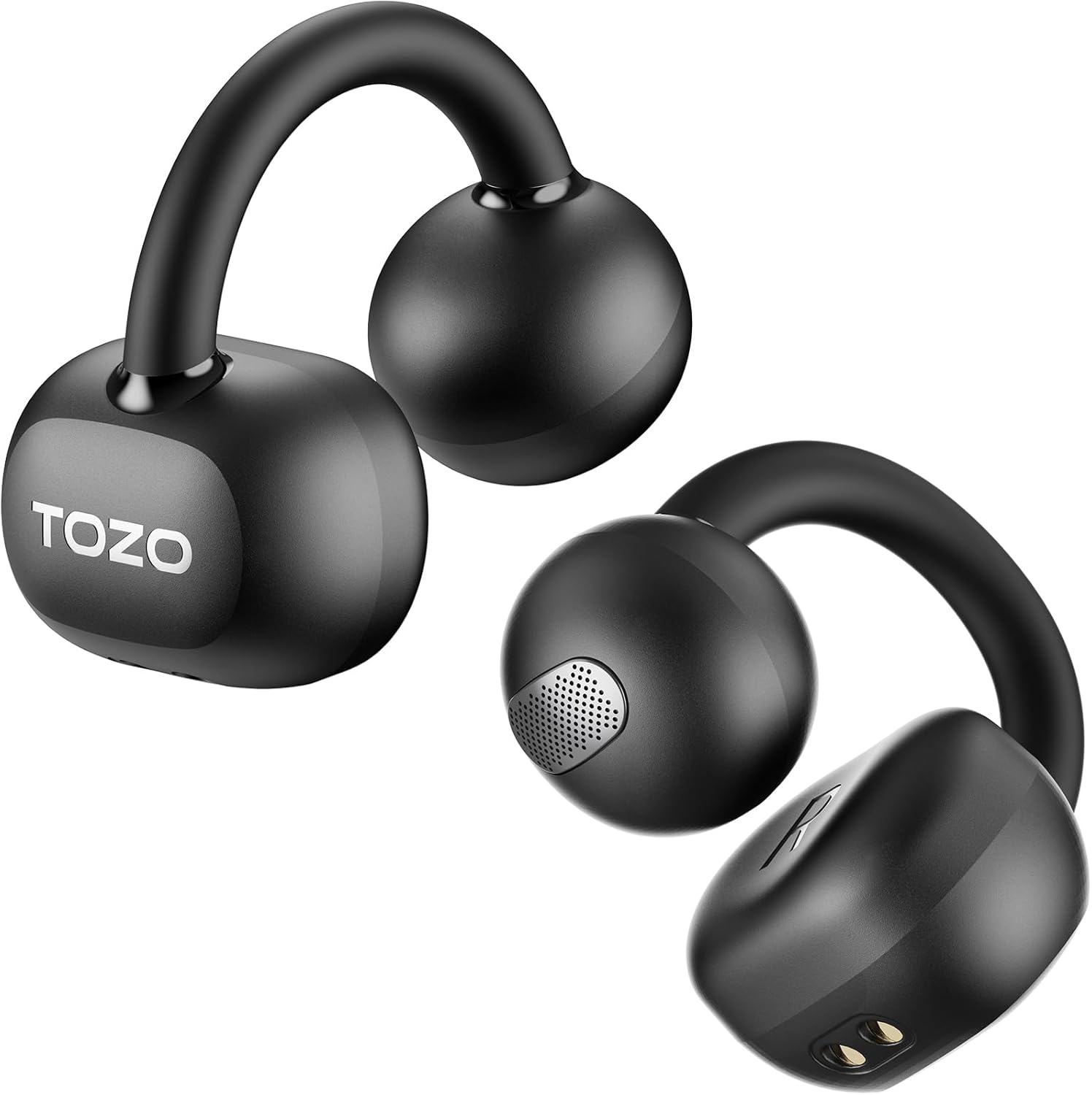
TOZO OpenEarRing takes a different approach from hook style rivals. It is a clip-on design that grips the edge of the ear like a small piece of jewelry, which is where the ring name comes from. The listing says a single earbud weighs only 5.1g, the lightest figure among our ten picks. For shoppers who want to forget they are wearing earbuds, that low weight is the main attraction. Its minimal shape also makes it easy to slip into a pocket or small bag.
The brand credits its OrigX acoustic technology for clear stereo detail and talks up dialogue for movies as well as music. The charging case has a digital display and Type-C charging, so you can see the remaining battery at a glance. Total playtime is listed as 40 hours, made of up to 10 hours per charge plus 30 more from the case, and Bluetooth 5.4 is said to hold a 15 meter link. The digital display is a small detail that saves guesswork before leaving the house.
This model suits office workers, students and commuters who spend long stretches with earbuds in and dislike pressure. It also works for people with glasses, since a clip-on shape avoids a hook sitting next to the temple arm. The listing mentions simple button controls for calls and music, which the seller frames as convenient when driving or exercising, though a button is easier to press than a touch panel. Calls while driving or walking are simpler with a firm button than a swipe.
A clip-on grip can feel different from one ear shape to another, so check the return policy in case the fit is not right. Very intense sports may suit a hook or frame better than a clip. The listing says the TOZO app offers 32 EQ modes, which is handy for tuning vocals or acoustic music. Keep your volume reasonable, because open sound can tempt you to turn it up. If you wear large earrings, check that nothing collides with the clip.
Very light at 5.1g per earbud
Digital display on the charging case
App with 32 EQ modes
Bluetooth 5.4 with a 15 meter range
Clip fit varies by ear shape
Less secure than a hook for hard sport
5PSIER Bone Conduction Headphones
PSIER Bone Conduction Headphones is the value-minded alternative for shoppers who like the idea of the top pick but want to compare more options. It follows the familiar bone conduction formula, with a fully enclosed cavity design and a flexible frame that wraps around the back of the head. The listing labels it a 2026 upgrade, and it targets running, cycling and hiking rather than desk listening. That mix of features gives it a clear identity beside the better known bone conduction names.
Specs are the story here. The listing mentions Bluetooth 6.0, a 60 ms low latency figure, a 33 ft range, 13 mm bone conduction drivers and 90 dB sensitivity. The frame is described as memory-titanium and weighs 23g, so it should bend to fit different head sizes. Type-C fast charging is listed, and the companion Boean app adds EQ settings with bass boost and vocal presets. Low latency of this kind can make video and short clips feel more in sync.
Choose this one if you want a lightweight frame for outdoor exercise and enjoy tinkering with an app. The IPX5 protection level in the listing points to resistance against sweat and rain, but not to swimming or submersion. Walkers, hikers and cyclists who like to hear passing traffic will find the open ear concept fits, and the stated ten hours of listening at fifty percent volume suits long weekend outings. It also suits anyone who likes to swap between audiobooks, music and maps while moving.
There are a few cautions. The ten hour estimate is tied to half volume, so louder listening will drain the battery sooner. The app also lists AI music generation and real-time translation, which are extras you may never use, so judge the headphones on core comfort and sound first. Bone conduction can tickle at high volume on some people, so start low and increase slowly. Read the charging instructions, because a fast charger can still shorten the lifespan if misused.
Lightweight 23g flexible frame
Bluetooth 6.0 with 60 ms latency listed
App with EQ and bass boost
Type-C fast charging
Battery figure is based on half volume
IPX5 protection is not for swimming
6Ultra Open Ear Headphones
Ultra Open Ear Headphones is another generic-titled product, yet its listing reads like a busy all-rounder. These are over-ear earbuds with soft, flexible hooks that follow the shape of the ear, and the seller says they sit outside the canal so traffic and conversation stay audible. The listing also uses the words bone conduction in the title, so read the description carefully to see how sound is actually delivered. It sits in the middle of the field, balancing value with a long feature list.
Under the hood the listing mentions 14.2mm dynamic drivers for full bass and clear vocals, plus directional audio that points sound toward your ears while limiting leakage. Built-in microphones with voice noise reduction support calls, and a four-microphone system is described in a separate line. Bluetooth 6.1 is listed with low latency for video, and the seller says it works with phones, tablets and laptops. A larger driver generally helps vocals and mid-range sound feel fuller in an open design.
This is a sensible choice for commuters, joggers and gym visitors who want a pair that lasts. The listing gives up to ten hours per charge and up to eighty hours with the case, which could cover several days of normal use. A sweat-resistant and water-resistant build is mentioned, so it should cope with workouts, though the text does not give a precise protection level. Students moving between lectures and the library may enjoy the long battery claim.
Since the product has no recognizable brand, look at the warranty terms and customer support before you commit. The listing also advertises AI translation, which can be a bonus for travelers but should not be the reason to buy. Directional audio reduces leakage rather than removing it, so keep the volume down in quiet rooms and libraries. Try the hooks with glasses before a long session. Compare the exact return period and warranty before relying on the stated features.
Large 14.2mm dynamic drivers
Up to 80 hours total with the case
Bluetooth 6.1 with low latency listed
Directional audio to limit leakage
Water protection level not specified
Brand support is unclear
7OHAYO Open Ear Headphones
OHAYO Open Ear Headphones, listed as the T10, stands out for an unusual internal layout. The seller describes a quad-speaker design, with two drivers inside each earbud, along with 15mm large-diaphragm dynamic drivers and a dedicated amplifier chip. That is a lot of hardware for a small open ear model, and it is why the product earns a place as the pick for people who care about audio engineering. The unusual approach gives audio fans a talking point that most hook models lack.
The primary drivers are said to be aligned with the ear canal to deliver direct sound, while the open structure keeps ambient noise audible. Each earbud weighs about 8 grams according to the listing, which compares it to a standard key. A smart digital display on the case shows battery status, and a single multi-function button manages music and calls with simple presses instead of touch gestures. Buttons also behave predictably when your fingers are sweaty or cold.
This pair suits cyclists, runners and commuters who want stable earhooks and an easy-to-read case. The IPX6 protection level in the listing means it should resist heavy splashes and sweat, which fits outdoor workouts and wet commutes. Bluetooth 5.4 is listed for quick pairing. Anyone who prefers physical buttons over touch zones may like the single-button approach, especially while wearing gloves. Weekend riders and commuters will find the design straightforward to live with.
Treat bold claims with care. The listing states that skin irritation is cut by ninety percent compared to in-ear styles, but there is no way to verify that figure from the page, so rely on general comfort logic instead. Forty hours of total playtime includes the case, and one charge gives about ten hours. A single button means fewer gestures, so learn the press patterns before heading out. Keep the case clean and dry so the display and charging pins keep working.
Dual driver layout in each earbud
Light at 8g per earbud
Case with a digital battery display
Single button control is easy to use
Comfort claims are hard to verify
One button limits gesture options
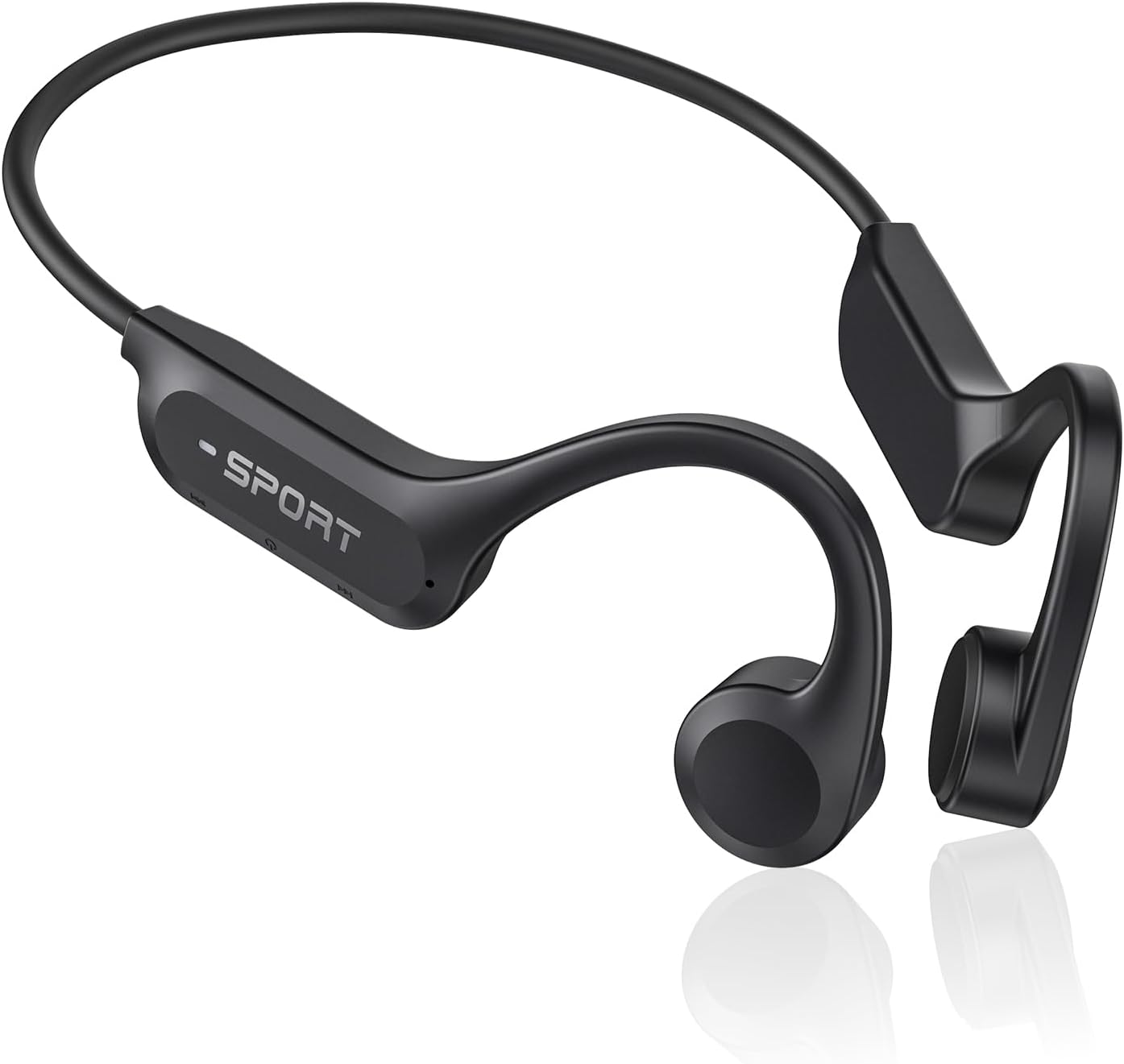
8CXK Bone Conduction Headphones
CXK Bone Conduction Headphones is a compact sport headset that focuses on weather resistance and light weight. The listing calls it a 2026 upgrade with a microphone, an IPX7 protection level and balanced audio, aimed at running, cycling and walking. It uses the familiar bone conduction layout, sending vibration through the cheekbones so the ear canal stays open to the outside world around you. Weather resistance of this kind is rare enough to deserve a prominent spot on the list.
The frame is described as a lightweight 28g wraparound with flexible titanium, which should hold steady during movement while reducing ear pressure. IPX7 means the headphones are built to survive temporary immersion in water, which is a step above basic sweat resistance. Battery life is listed at ten hours of music and calls, and the Boean app adds EQ settings, an AI music tool and translation in 91 languages. That frame weight is slightly higher than some rivals but still described as light.
Pick this one if you exercise outdoors in unpredictable weather, or if you regularly come home soaked after a ride. Commuters who walk to the station in the rain will like the sturdy protection, and walkers who enjoy podcasts can use the stable frame all day. People who like clear voices will find that a balanced audio tune is a sensible fit for spoken content. Dog walkers and delivery workers are just two groups that spend long hours outdoors.
Remember that IPX7 does not make a product designed for swimming laps, and the listing gives no waterproof guarantees beyond that level. Bone conduction sound is more open and less rich in bass than sealed earphones, so adjust your expectations before comparing. Dry the contacts after a wet outing before charging. The app extras are optional, so ignore them if you just want music. Always let it dry completely, and store it away from direct heat.
IPX7 protection listed
Flexible titanium frame at 28g
Ten hours of music and calls
App with EQ and translation
Bass is lighter than in-ear styles
Not meant for swimming
9Baseus Inspire XC1 Open Ear Clip-On Earbuds
Baseus Inspire XC1 is a clip-on open ear model with a premium angle. The title mentions sound tuning by a famous audio brand and Dolby Audio, but the stronger story is the hardware layout. It joins a dynamic woofer with a balanced armature tweeter in a hybrid two-way engine, which splits bass and treble between two drivers. That is a more complex build than most open ear earbuds offer. That engineering effort gives it a distinct place among the clip-on options.
The listing explains that digital processing and active crossovers feed the two drivers, with adaptive SuperBass and SuperBalance tuning on top. Fit relies on zero-sense air cushions, flexible ring joints and soft liquid silicone, which together aim for a breathable all-day feel. A four-mic array with AI voice pickup and wind-noise reduction is listed for calls, including while cycling at moderate speeds. These details are meant to reduce hot spots and rubbing across long listening days.
This is the pick for commuters and remote workers who spend a lot of time on calls. The clip-on shape suits glasses wearers and people who dislike hooks, and the listing says protection reaches IP66, covering rain, sweat, dust and splashes. Up to eight hours per charge and forty hours with the case are listed, and a ten minute quick charge is said to deliver two and a half hours. Teams that take calls while traveling between meetings will find it a handy tool.
A hybrid driver can sound more refined, but open ear designs always lose some bass in noisy surroundings. Clip-on grips also vary by ear size, so make sure the return window is clear. The IP66 listing covers dust and splashes, not immersion, so keep it away from deep water. Because the extra tuning claims come from the seller, judge the sound by your own ears after unboxing. Spend a day with it at home to confirm the clip feels comfortable.
Hybrid woofer and tweeter layout
Four-mic array with wind-noise reduction
IP66 protection listed
Quick charge gives 2.5 hours in 10 minutes
Clip fit may not suit every ear
Open sound loses bass in noise
10Nothing Ear
Nothing Ear (Open) rounds out the list as the feature-rich option. It uses an ergonomic earhook with a 50-degree tilt and a three-point balance, finished in skin-friendly silicone. The listing describes it as ultra-light and promises all-day comfort and a secure fit. For shoppers who want a stylish pair with a transparent case and a clear design identity, this is the one to look at. That balance of style and function is why it appeals to a wide range of people.
The sound comes from an unusual stepped driver with a uniquely shaped diaphragm, a titanium alloy coating and ultralight parts. Bluetooth 5.3 supports multipoint pairing, so the earbuds can stay linked to two devices and switch between music and calls. Dual microphones and AI noise reduction handle voice, and the Nothing X app offers custom EQ and a low-latency gaming mode. Dual connection saves the effort of unpairing and repairing each time you change device.
This model suits office workers who switch between a laptop and a phone, travelers who juggle devices, and gamers who want a lower-lag mode for mobile titles. The listing gives IP54 dust and water resistance, enough for sweat and light rain. Combined playback is listed at thirty hours, built from up to eight hours in the earbuds plus twenty-two more from the case. Frequent flyers and students who share devices may find the multipoint feature especially useful.
Check the left and right markings before inserting, because the listing says these need to be told apart and the hook angle adjusted. IP54 is a lower level than some sport rivals, so it is better for light exercise than for downpours. The sound isolation system minimizes leakage, but it cannot remove it completely. Keep the volume moderate when sharing a quiet room. Refer to the app for firmware updates and to confirm that settings are saved.
Multipoint pairing for two devices
App with EQ and gaming mode
Adjustable earhooks with 50-degree tilt
Thirty hours combined playback
IP54 protection is modest for hard sport
Needs care to set left and right correctly
How to Choose the Best Open Ear Headphones
What open ear headphones are
Open ear headphones deliver sound without sealing the ear canal. Instead of a silicone tip or a thick cushion, the speaker sits near the ear or against the cheekbone. Because nothing blocks the canal, you hear your surroundings in the normal way, with music added on top. That is the key difference from closed-back headphones and in-ear buds, which are built to shut the outside world out.
This design is popular with runners, cyclists, parents, office workers and anyone who wants to stay reachable while listening. It also helps people who find ear tips itchy or heavy after an hour. The trade-off is simple. Open designs usually give up some bass and let more sound leak out, so they work best at moderate volume in places where you want awareness more than isolation.
Bone conduction versus air conduction
Bone conduction headphones send small vibrations through the bone near the ear, so the sound reaches the inner ear without relying on the eardrum path alone. Models such as the SHOKZ OpenRun Pro, PSIER and CXK use this idea. The result is a clear voice-forward sound and complete freedom around the ear canal, which makes them a good fit for exercise outdoors.
Air conduction open ear earbuds, such as hook and clip-on styles, aim a speaker toward the ear canal from a short distance. Bass can be fuller on these, because the drivers push air in the traditional way. Neither type is better in every case. Choose bone conduction for a wraparound feel and awareness, and choose air conduction when you want stronger low frequencies and a smaller shape.
Awareness and safety outdoors
The biggest reason shoppers pick open ear headphones is awareness. You can hear a car approaching, a cyclist ringing a bell or a coworker saying your name. Listings in this guide repeat that point, linking it to running, cycling, commuting and everyday walking. Awareness is a helpful safety layer, but it does not replace attention, so keep your head up and obey local rules for your activity.
Volume matters just as much as the design. If music is loud enough to hide traffic, the open ear benefit is gone. Keep playback at a level where you can still hear footsteps and voices. On shared roads or trails, many people leave one side quiet or choose a quieter podcast. Check local laws too, since some places limit headphone use while riding or driving.
Fit styles: hooks, clips and frames
Open ear products come in three main shapes. Earhooks, as on the Nothing Ear (Open) and OHAYO T10, loop over the top of the ear and keep the speaker pointed at the canal. Clip-ons, such as the TOZO OpenEarRing and Baseus Inspire XC1, grip the ear edge like a small ring. Frames, such as the OpenRun Pro, wrap around the back of the head and rest on the cheekbones.
Hooks and frames tend to be the most stable for hard movement, while clips are often the lightest and easiest to forget. Glasses wearers should look at clip styles or slim frames, since a thick hook can crowd the temple arm. Small ears may prefer adjustable hooks. Whatever you pick, check the return terms so you can swap if the fit does not feel right.
Sound quality and bass expectations
Open ear audio has a different character from sealed headphones. Voices, podcasts and acoustic music usually come through clearly, while deep bass is harder to produce because air escapes around the ear. Larger drivers, such as the 16mm unit in the Soundcore V20i or the 14.2mm unit in Ultra Open Ear Headphones, can help, and tuning features aim to give low notes more weight.
Do not expect the thump of a closed gaming headset or the isolation of earbuds. Instead, think of open ear sound as a soundtrack to your day. Equalizer apps, like those listed for TOZO, PSIER, CXK and Nothing, let you adjust bass or vocals to your taste. Quiet surroundings make the best listening spot, since loud traffic can swallow the details.
Battery life and charging cases
Battery numbers on listings can look confusing, so separate two figures. The first is playtime per charge, usually between eight and ten hours in this guide. The second is total playtime, which adds the extra charges stored in the case. The generic 80 hour models and the 40 hour TOZO, OHAYO and Baseus cases all rely on this idea, so each earbud will still need a fresh charge after one session.
Bone conduction headsets such as the OpenRun Pro or CXK have no case, so the headset itself carries the whole battery, but they often charge quickly. The OpenRun Pro listing says five minutes gives up to an hour and a half. Real playtime also changes with volume, so keep expectations flexible, especially when a figure is quoted at a lower volume setting.
Calls and microphones
Open ear designs are popular for calls because you hear your own voice and the room naturally, which avoids the muffled feeling some in-ear buds create. The weak spot is the microphone, which has to pick your voice up in wind and traffic. Listings mention several approaches, including four-mic arrays, AI voice enhancement and ENC noise cancelling, which filters background noise on the transmit side.
A larger number of mics does not guarantee a better call, but it gives the software more data to work with. Wind-noise features help cyclists and runners, while directional sound helps in offices. Remember that open speakers can leak your caller to people nearby, so move to a quiet corner or lower the volume on private conversations. Place a trial call at home first, and adjust the mic position if your voice sounds distant to the caller.
Water and sweat protection
Water protection is shown as an IP code. The first digit covers dust and the second covers water, so IPX5 or IPX7 only talk about water. IPX5 means resistance to jets of water, IPX6 covers stronger jets, and IPX7 covers temporary immersion. These levels suit sweat and rain, and the listings in this guide use them for running, cycling and gym use.
Several products here do not state a level at all, so check the live listing if you plan to exercise hard in wet weather. Even a protected pair needs care. Wipe the contacts after a sweaty run, let the charging port dry fully, and avoid showers, saunas and swimming unless the manufacturer says the model is designed for them. Treat the code as a guide to everyday use, not a promise of perfect protection.
Bluetooth versions and latency
Bluetooth versions on these products range from 5.3 to 6.1. Newer versions improve pairing speed, power efficiency and range in theory, but real results depend on both the earbuds and the phone. A phone with older Bluetooth will connect at its own level. Most people will notice stable pairing and fewer dropouts more than any version number printed on a box.
Latency is the delay between what you see and what you hear. For music it hardly matters, but for video or mobile games it can be noticeable. The PSIER listing quotes 60 ms, and the Nothing Ear (Open) offers a low-latency gaming mode in its app. Multipoint pairing, found on the Nothing model, is useful if you move between a laptop and a phone.
Apps, EQ and extra features
Many open ear models now come with companion apps. These let you change the equalizer, remap controls, check the battery or update firmware. TOZO lists 32 EQ modes, Nothing offers custom EQ and a gaming mode, and the Boean app on the PSIER and CXK models adds AI music, translation and bass boost settings. These tools are optional but they can help fix a thin sound.
Treat flashy extras with a little caution. Light shows, translation and AI song generation can be fun, yet they will not matter much in day-to-day use. Put your priority on fit, battery, microphone quality and protection first. If you do want an app, check that it is available for your phone, and read what permissions it asks for before installing.
Safe listening volume and sound leakage
Open ear headphones can feel safer because you are not blocking the ear, but loud sound is still loud. Long periods at high volume can be tiring, so keep the level moderate and take breaks. A good rule is to turn the volume down if you must shout to talk to someone nearby, or if the sound leaves your ears ringing or uncomfortable afterwards.
Leakage is the other side of open design. Because the speaker is not sealed, people sitting close can hear faint sound, especially at higher levels. Listings mention directional audio and sound isolation systems, which help but do not remove the effect. In quiet offices, libraries and trains, lower the volume or pick a bone conduction model, which tends to leak less at modest levels.
How to choose the right pair
Start with how you will use them. For running and hard training, look at a wraparound frame such as the OpenRun Pro, PSIER or CXK, or a firm earhook like the OHAYO T10. For office work and calls, consider the Baseus Inspire XC1 or Nothing Ear (Open). For lightness and glasses compatibility, the TOZO OpenEarRing is a good place to begin.
Next, compare battery, water protection and support. A brand with a clear warranty is worth more than a few extra hours of playtime. Finally, read the live listing for the latest price, accessories and return policy, since these change often. Pick the product that fits your daily routine rather than the one with the longest feature list. A short list of two or three models makes the final choice much easier.
Frequently Asked Questions
What are open ear headphones?
Open ear headphones play audio without covering or sealing your ear canal. The speakers sit near the ear on a hook, clip or frame, or send sound through the cheekbone. You can hear music and your surroundings at the same time.
Are open ear headphones good for running?
They are a popular choice for running because they keep you aware of traffic and other runners and avoid the pressure of ear tips. Look for a secure hook or frame and a listed sweat protection level.
Do open ear headphones have good bass?
Bass is usually lighter than on sealed headphones, because air escapes around the ear. Larger drivers and bass tuning features can help, but expect a more open, natural sound rather than deep, isolating thump.
Is bone conduction better than hook style earbuds?
Neither is better for everyone. Bone conduction suits sport, awareness and a wraparound fit, while hook and clip-on earbuds often deliver fuller bass and smaller shapes. Pick the one that matches your activity and comfort needs.
Can other people hear my music?
Sometimes, yes. Open designs leak some sound, especially at higher volume in quiet rooms. Keep the volume moderate in offices and on public transport, and look for models that mention directional audio to reduce leakage.
How long does the battery last on open ear headphones?
Listings in this guide quote about eight to ten hours per charge, with cases extending total playtime to between thirty and eighty hours. Real life use depends on volume, features and how often you use the case.
Are open ear headphones waterproof?
Some are protected against sweat and rain, and a few list IPX7 for temporary immersion. Others state no level at all. Check the live listing, avoid swimming unless the maker says it is supported, and dry the contacts.
Do open ear headphones work for phone calls?
Yes. Because you hear your own voice and the room naturally, calls can feel comfortable. Microphone quality varies, so look for multiple mics, wind-noise reduction or AI voice features if you take many calls outdoors.
Will they stay on during exercise?
Wraparound frames and earhooks tend to stay put during hard movement, while clip-on designs are lighter and may shift more. Try the fit at home, and check the return window in case your ears need a different shape.
Is it safe to wear open ear headphones all day?
Comfort is often better than with ear tips, but sound is still sound. Keep the volume low enough to hear your surroundings, take breaks, and stop if anything feels uncomfortable. Ask a professional if you have health concerns.
The Bottom Line
For most shoppers, the SHOKZ OpenRun Pro is the best open ear headphone pick in this guide thanks to its bud-free bone conduction design, secure frame and quick charging. If you prefer earbuds, the TOZO OpenEarRing, Baseus Inspire XC1 and Nothing Ear (Open) each cover a different comfort and feature need.
Whichever you choose, keep the volume sensible, confirm the fit and warranty, and open the live listing to check the current price before buying.
Updated for the 2027 buying season. Amazon listings and availability change often, so check the product page for current details.


Write Your Review
No reviews yet. Be the first to share your experience!