

As an Amazon Associate we earn from qualifying purchases. If you buy through links on this page we may receive a commission at no extra cost to you. Product details come from Amazon listings and can change.
If you spend your day in meetings, you already know that a sealed headset can feel heavy and isolating. That is why the best open ear headphones for video calls have become so popular with remote workers, teachers and students. Open ear designs rest outside the ear canal, so you hear your colleague clearly and still notice the doorbell, a child or a passing car. This guide covers nine models that use bone conduction or air conduction and that list a microphone for calls.
It is written for people who want comfort over long sessions, simple mute controls and a mic that keeps their voice clear. Some picks are office style headsets with a boom mic, while others are sport style earbuds that also handle meetings well. Each product gets four short sections on what it is, how it works, who it suits and what to watch for.
Prices change often, so we do not quote them here. Every product links to its live listing, where you can check the current offer, colors and any bundled items before you decide.
The Shokz OpenComm2 UC is our top pick because it pairs a flexible noise canceling boom microphone with an open ear bone conduction frame made for long workdays. The MAIRDI Open Ear Headphones with Mic is the best for talk time, and the 23g Trucker style headset is the lightest option for all day meetings.
Key Takeaways
Best Open Ear Headphones For Video Calls at a Glance
| Product | Our score | |
|---|---|---|
| 8.6 / 10 | Check Price → | |

MAIRDI Open Ear Headphones with MicBest for Talk Time
|
9.2 / 10 | Check Price → |

Open Ear Headphones with MicBest for Multitasking
|
8.4 / 10 | Check Price → |

Open Ear Headphones with MicBest Lightweight Pick
|
9.0 / 10 | Check Price → |

New Waterproof Open-Ear Bone Conduction HeadphonesBest Titanium Build
|
9.7 / 10 | Check Price → |

SHOKZ OpenRun ProBest for Active Days
|
9.0 / 10 | Check Price → |

Ultra Open Ear HeadphonesLongest Total Playtime
|
8.6 / 10 | Check Price → |
Wireless Earbuds Bluetooth 5.4 Open Ear Headphones with EarhooksBest Battery Display
|
9.0 / 10 | Check Price → |

Soundcore V20i by Anker Open Ear EarbudsBest for Fit Control
|
8.8 / 10 | Check Price → |
How We Chose the Best Open Ear Headphones For Video Calls
This is a research based guide, not a lab comparison. We read each listing carefully, looking at the listed specs, microphone design, comfort features, battery claims and the use cases the seller describes. We then matched those details to what matters on a video call: clear voice pickup, easy muting, a stable connection and a fit you can wear for hours. We kept only open ear products that list a microphone, and we left out a camera headset and a duplicate color version of a model already included.
Each pick also carries an editorial score out of 10, shown separately on the page. The score reflects how well the listed features fit the keyword, how complete the listing details are and how practical the design looks for daily meetings. Listings can change, so treat the details here as a starting point and confirm the specs on the live page before you buy.
In-Depth Reviews
1Shokz OpenComm2 UC Bone Conduction Bluetooth Headset

The Shokz OpenComm2 UC is the headset in this group that is built first for work calls, which is why it leads the list. It uses bone conduction, so sound travels through the cheekbones while the ear canals stay open. The listing describes a flexible boom microphone with noise canceling, plus a lightweight, ergonomic frame meant for long workdays. For anyone who lives in meetings, that mix of an open ear format and a dedicated boom mic is exactly what this keyword is asking for.
The boom microphone is the key feature here. Because it sits close to the mouth, it can pick up a voice more directly than a tiny mic hidden in an earpiece, and the noise canceling is meant to keep room sound from reaching the other side of the call. The listing also mentions long battery life with quick charge, though it gives no exact hours, so check the live page for the current figure. UC platform compatibility means it is meant to work with leading unified communication apps.
This model suits remote workers, managers, teachers and anyone who joins back to back meetings. The open ear format lets you hear a colleague who walks in, a delivery at the door or a family member with a question, without pulling anything off your head. It also fits people who find in-ear tips or clamping headsets tiring after a few hours. A commuter could use it for calls too, but its boom design points toward desk and office use first. It is also a sensible fit for hybrid teams that share a desk, since one headset can move between people without ear tip hygiene worries.
A few caveats are worth knowing. Bone conduction does not isolate you from your room, so a noisy open office will still reach your ears, and people sitting close may hear faint sound at higher volume. Keep the volume moderate during long sessions. The listing does not state weight or battery hours, so confirm those details before buying. Prices move around, so use the live listing link to see the current offer. Also remember to check that your meeting apps and computer accept a standard Bluetooth headset connection.
Boom mic for focused voice pickup
Open ear bone conduction comfort
Made for office and remote work
Quick charge listed
No exact battery hours in the listing
Open ear design does not block room noise
2MAIRDI Open Ear Headphones with Mic
The MAIRDI Open Ear Headphones with Mic earns its place by putting battery life and call features first. The listing claims up to 17 hours of talk time and up to 250 hours of standby, which is the longest talk figure among the headsets here. It is an air conduction design, so small speakers sit near the ear rather than inside it. Add an adjustable boom mic and a mute function, and it reads like a headset made for a full day of calls.
On the technical side, the listing describes AI powered noise cancellation on the microphone and a boom that rotates through 270 degrees, so you can set the mic where it hears you best. Bluetooth 5.3 is listed with a range of about 49 feet, and multipoint pairing lets two devices stay connected at once. A single multifunction button handles calls, music and volume, which keeps the controls easy to learn during a busy morning.
This is a strong match for office workers, call center staff, drivers who take hands free calls and students in online classes. At 28 grams with soft silicone pads, it is aimed at people who wear a headset for most of the day. The listing says it also works with glasses or helmets, which helps anyone who wears frames at a desk. Cyclists and hikers are named as well, so it can follow you outside. Team leads who coach others by phone will also like having both ears free to hear a quiet office.
Remember that air conduction sound leaks more as volume rises, so a quiet room may let others hear your audio. The boom mic is helpful but can look a little bulky if you prefer a minimal style. Talk time claims depend on volume and usage, so expect real numbers to vary. Because prices change, open the live listing to see the current offer before you commit. A quick trial in your own space will show whether the boom position feels natural at your desk.
Longest listed talk time here
Adjustable 270 degree boom mic
Multipoint for two devices
Works with glasses or helmets
Sound can leak at high volume
Boom mic adds some visual bulk
3Open Ear Headphones with Mic
This 29g Open Ear Headphones with Mic is a generic no frills pick that leans on practical features instead of a famous name. The listing calls it an air conduction headset with a microphone, dual device connection and a mute button. It targets people who answer calls on a laptop, then jump to a phone, then go back to music. For shoppers who want an open ear headset without paying for a big brand, it is a sensible place to start.
The most useful feature is dual device connection, which lets the headset stay linked to two devices at once. You can take a meeting on a laptop and still hear a phone call without a long pairing routine. The listing mentions upgraded 16mm drivers for balanced sound with clear vocals, Bluetooth 5.4 for quick pairing and a range of up to 49 feet. One touch mute helps when you need to silence the mic fast.
It fits office professionals, students, drivers and multitaskers who juggle several screens. Because it sits outside the ear canal, it avoids the pressure that some people feel with earbuds during an all day video schedule. The lightweight, flexible frame is described as comfortable for extended wear, and the listing names work, driving and workouts as use cases. It works as a spare headset for a home office or a travel bag. Gift buyers shopping for a colleague who works from home may find this an easy, low risk choice.
The listing gives up to 10 hours of talk time and playback, which is shorter than the top talk time pick, so plan a mid week charge if you take many calls. As with all open ear designs, a loud room will compete with your audio. Because the brand is generic, check what the listing says about warranty and support. Prices change, so view the live listing for today’s offer. Read the included manual early so you learn the controls before your first big meeting.
Two devices connected at once
One touch mute
Light 29g body
Bluetooth 5.4 pairing
About 10 hours per charge
Generic brand, check support details
4Open Ear Headphones with Mic
At just 23 grams, this Trucker style Open Ear Headphones with Mic is the lightest headset in the guide. The listing describes a glasses friendly, pressure free design that rests lightly on the ears. Although it was written with long haul drivers in mind, the same traits suit a video call desk: low weight, a boom style mic and open ears. It is a good choice if the thing you hate most about headsets is the clamp on your head.
Two microphones with AI noise reduction are listed, along with a 210 degree rotatable mic for flexible voice pickup. The noise reduction is meant to cut road noise and background sound, and the same idea helps with keyboard clatter or a fan. Muting is done by pressing the minus button three times, and a voice prompt confirms mute on or off. A 15mm dynamic driver is listed, and the listing says air conduction brings better bass than bone conduction.
This model suits people who take long calls and want something they barely notice. Sales teams, support agents, drivers and home workers all fit the picture. The voice prompt for mute is handy when you cannot glance at a screen, such as during a screen share. Podcast listeners and coaching call attendees are mentioned in the listing too, since the mids and highs are described as clear for spoken audio. Anyone who dislikes heavy gear during long webinars should keep it on the shortlist.
A triple press for mute is easy to learn but slower than a dedicated mute switch, so practice it before an important meeting. Bluetooth 5.4 is listed with a signal range of about 33 feet, shorter than some rivals, so stay near your device. Up to 12 hours of talk time is promising, yet real use varies. Prices change, so check the live listing. Also confirm how the controls respond when you wear it with a hat or thick hair.
Lightest here at 23g
Dual mics with AI noise reduction
Voice prompt for mute
12 hours of talk time listed
Triple press mute is not instant
Shorter 33 foot range
5New Waterproof Open-Ear Bone Conduction Headphones
This New Waterproof Open-Ear Bone Conduction Headphones model is a generic pick with an unusually sturdy build. The listing describes a titanium frame that weighs 29 grams and can stretch and bend without losing its shape. It sends sound through the cheekbones, which keeps the ear canals free. The seller also says the built in microphone is suited to remote video conferences and long business meetings, which is why it earns a spot in this guide.
Bone conduction works by turning audio into small vibrations that travel through the bones of the face to the inner ear, so the ear canal does not need a speaker pointed into it. The listing pairs this with Bluetooth 5.4 and a noise cancelling microphone feature for hands free calls. Battery life is listed at up to 10 hours, with Type-C fast charging. An IP55 protection level is mentioned, which suggests resistance to sweat and light splashes.
It suits people who want one headset for the desk and the gym. A remote worker can take morning meetings, then wear it for a run or ride without swapping gear. The flexible titanium band should also appeal to anyone who tends to bend or sit on their earbuds. Students who move between classes and study halls fit the use case too, as the open ear fit helps them hear announcements. Teachers who walk between rooms during the day can also benefit from the same secure frame.
Because there is no boom mic, voice pickup depends on the small built in mics, so a quiet room will give the best calls. Bone conduction usually gives lighter bass than regular earbuds, and turning the volume up to compensate is not wise for long sessions. The brand is generic, so read the warranty terms on the listing. Prices change, so open the live page for the current offer. Wipe the contact points after workouts so the band stays pleasant to wear at a desk.
Flexible titanium frame
Bone conduction keeps ears open
Type-C fast charging
Water resistant IP55 level
No boom mic for call pickup
Generic brand, limited detail on support
6SHOKZ OpenRun Pro
The SHOKZ OpenRun Pro comes from a brand known for bone conduction, and it is the sporty choice in this guide. The listing calls it a bud free open ear design with a lightweight wraparound titanium frame. It is aimed at workouts and running, yet it lists a built in microphone and universal pairing with Android, iOS and Windows devices. That makes it a smart pick for people who want a meeting headset that does not look like office gear.
The listing credits its ninth generation bone conduction technology and a feature named TurboPitch for clear sound, strong volume and a richer bass than older designs. Ten hours of continuous music, calls and podcasts are listed, and a five minute quick charge is said to add up to 1.5 hours. A hair band is included in the box. The microphone is built into the frame, so you rely on that rather than a boom for voice pickup.
It suits hybrid workers who take calls while walking, runners who answer a meeting call on the move and commuters who want to keep street sounds in range. The secure wraparound fit stays put when you turn your head, which helps on a standing desk or during a workout. If your day mixes video calls with exercise, one headset can cover both and reduce the number of devices you charge each week. Standing desk users and people who pace during calls will appreciate the stable feel.
Without a boom mic, call clarity depends on the room, so a windy street or loud cafe can make your voice harder to hear. Open ear sound leaks as volume rises, so keep it modest around other people. The listing leans toward sport, so office style controls are less of a focus. Prices vary, so follow the live listing link for the current offer. Check the headband and fit options early, since small adjustments make a big difference in comfort.
Trusted bone conduction brand
Secure titanium wraparound fit
Quick charge listed
Works with Android, iOS, Windows
Built in mic, no boom
Sport focus over office features
7Ultra Open Ear Headphones
The Ultra Open Ear Headphones is an earbud style set with ear hooks, and it stands out for its charging case. The listing says each charge gives up to 10 hours of music or talk time, while the case extends total playtime up to 80 hours. For video calls, the draw is a four microphone noise reduction system and large 14.2mm dynamic drivers. It also combines translation features with calling, which can help on international team calls.
The listing describes sound that sits outside the ear canal and uses directional audio to point sound toward the ears while limiting leakage. Soft, flexible hooks follow the shape of the ear to hold the earbuds in place. Bluetooth 6.1 is listed with easy pairing and low latency, which can help video stay in sync with audio. The listing also notes a sweat and water resistant build, though it gives no formal protection level.
This set suits travelers, students and hybrid workers who want a pocketable case instead of a headband. Earbud style open ear products are easier to stash in a bag, and the big case battery means you may go a week or more between wall charges. It works with iPhone, Android, tablets and laptops, so it can follow you across devices. The built in translation function may also suit language learners or global teams. Anyone who attends calls from a train or a cafe may like keeping the case in a jacket pocket.
Two separate earbuds are easier to drop or lose than a connected band, so keep them in the case. There is no boom mic, so heavy background noise may still reach callers even with noise reduction. Directional audio helps, but sound can still leak at high volume. Prices change, so check the live listing for the current offer and the exact color you want. Choose a quiet spot for important calls, because the earbuds sit farther from your mouth than a boom would.
Case lists up to 80 hours
Four mic noise reduction
14.2mm dynamic drivers
Bluetooth 6.1 pairing
Easy to misplace small earbuds
No boom mic for noisy rooms
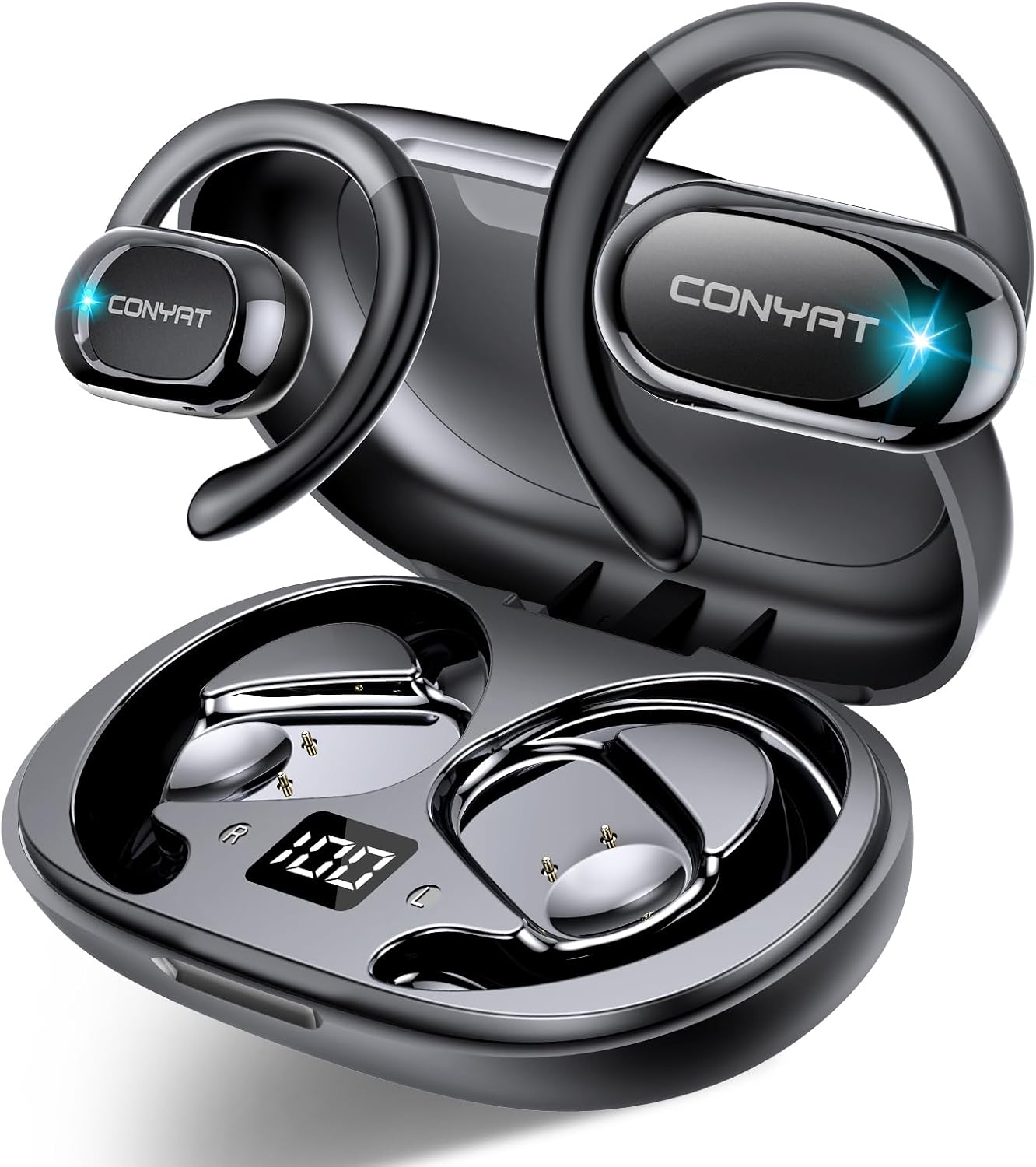
8Wireless Earbuds Bluetooth 5.4 Open Ear Headphones with Earhooks
The Wireless Earbuds Bluetooth 5.4 Open Ear Headphones with Earhooks is one of the few listings that names video calls directly in its comfort feature text. It uses air conduction earbuds with flexible hooks, so nothing needs to be pushed into the ear canal. The seller highlights a digital display on the charging case that shows battery left at a glance. That small feature solves a common problem: finding out your earbuds are empty five minutes before a meeting.
The listing mentions 14.2mm dynamic drivers with balanced audio and clear vocal detail, along with air conduction that disperses sound naturally. Playtime is listed at 8 hours per charge, and the case is said to extend that to up to 58 hours, with a full case recharge in about 2 hours over USB-C. Bluetooth 5.4 is listed for quick pairing and automatic reconnection to your last device. HD calling and real time translation are included.
It is aimed at people who split time between meetings, workouts and travel. The oversized silicone coated hooks and an IP7 protection level mentioned in the listing suit sweaty sessions or rainy commutes. Students and remote workers who carry a bag will like the case, while frequent flyers may use the translation tool for basic conversations abroad. It also pairs with phones, laptops, tablets and PCs, which keeps setup simple. People who forget to charge gear will value being able to check the case before leaving home.
Eight hours per charge is less than some headsets in this guide, so plan to return the buds to the case between long meeting blocks. As with other earbud designs, there is no boom mic, so a quiet space gives the best voice quality. Translation features depend on an app and connection, so read the listing before relying on them. Prices change, so use the live link. Update any companion software if the listing offers it, and check that translation settings are off during normal calls.
Digital battery display on case
Quick USB-C case recharge
Ear hooks for secure fit
Auto reconnect to last device
8 hours per charge
Translation features depend on app and signal
9Soundcore V20i by Anker Open Ear Earbuds
The Soundcore V20i by Anker is a well known name in affordable audio, and its listing focuses on comfort and call clarity. It is a true wireless open ear set, so there is no cable or band between the earbuds. The seller describes a non intrusive design for all day wear and highlights four microphones with an AI algorithm for crisp calls. For video calls, that call tuning is the main reason it belongs on this list.
A rotating design offers four adjustable positions, so you can turn the earbuds until they sit comfortably and securely. That matters because open ear fit changes how much sound reaches your ear and how steady the buds feel on a long day. The listing credits 16mm drivers with titanium coated domes and BassUp technology for stronger bass. It also mentions customizable lights that sync with the beat, an unusual extra for this category.
This pair suits people who value a tunable fit, such as those with smaller ears or glasses that crowd the ear area. Students, creators and home workers can switch between meetings and music without changing gear. The lights add some fun for casual listening, though many office users will skip them. The open ear design also suits urban walking, since you can hear traffic and announcements while taking a call. Shoppers who want a recognizable name on the box may feel more comfortable here than with a generic listing.
The listing does not state battery hours, case size or a protection level, so check the live page for those details. Without a boom mic, background noise reduction depends on the four mic system and the AI, which helps but cannot remove every sound. Bass from open ear designs is lighter than from sealed earbuds. Prices change, so open the live listing to see today’s offer. Try each of the four positions for a few minutes before settling on the one that feels best.
Four fit positions
Four mics with AI call tuning
16mm drivers with BassUp
No wires between earbuds
Battery details missing in listing
Lights are of little use at work
How to Choose the Best Open Ear Headphones For Video Calls
What open ear headphones are and why they suit video calls
Open ear headphones deliver sound without sealing the ear canal. Some use air conduction, where small speakers sit near the ear and aim sound inward. Others use bone conduction, where gentle vibrations travel through the cheekbones. Either way, the ear stays open, so you hear the room as well as the call. For meetings, that means you can sense when someone speaks to you in person.
The format also removes the stuffed feeling that in-ear tips can cause after a few hours. Many remote workers like that they can listen to a colleague while still hearing a doorbell or a pet. The trade off is that open designs give less isolation, so loud places can compete with the call. Think of them as comfort and awareness tools, not noise blockers.
Microphone quality: boom mic or built in mics
Microphone design is the biggest difference between the models here. A boom mic, like the one on the Shokz OpenComm2 UC, sits near the mouth and can capture a voice more directly. Built in mics, as on most earbud styles, rely on small openings and software to pick up speech. In a quiet home office both can work well, but in a busy space a boom mic usually has an edge.
Noise reduction features help every design. Several listings mention AI noise reduction or multiple microphones, which try to separate your voice from fans, traffic or keyboards. These systems are not perfect, and they can sometimes clip the start of a word. Before a big meeting, record a short voice memo on your own device so you can hear how your voice sounds in your usual space.
Bone conduction versus air conduction for calls
Bone conduction sends vibrations through the bones of the face, leaving the ear canal totally free. Air conduction uses small speakers placed near the ear that send sound through the air. Both are open ear, but they feel different. Bone conduction can create a light tingle at higher volumes, while air conduction tends to produce a fuller sound but can leak more audio to people nearby.
For voices, both do the job. Spoken word has fewer bass demands than music, so the lighter low end of bone conduction matters less on calls. Air conduction models, such as the Trucker style headset, claim better bass than bone conduction. If your day is mostly meetings and podcasts, either type is fine. If you also listen to music, you may lean toward air conduction.
Comfort and weight for all day wear
Comfort decides whether you keep a headset on through a six hour meeting block. The headsets in this guide list weights as low as 23 grams, and most sit near 28 or 29 grams. At that weight the frame should feel more like a pair of thin glasses than a headset. Soft silicone pads, flexible bands and titanium frames all aim to spread contact without pressure.
Pay attention to how a frame sits with your own head shape and accessories. If you wear glasses, check whether the listing mentions glasses friendly design. If you wear a helmet or a hat, check the same. Earbud style open ear products with hooks can be lighter and easier to carry, while band style products are harder to lose. Pick the format that matches how you move through the day.
Battery life and charging habits
Battery claims vary widely between listings. The MAIRDI headset lists up to 17 hours of talk time, the Trucker style headset lists up to 12 hours, and several others list around 10 hours. Earbud styles with cases list much larger totals, but those include recharges from the case. For a workday, count the hours of calls you take, then add a buffer, since real use varies with volume and codec.
Quick charge features can save a bad morning. The OpenRun Pro lists a five minute charge for up to 1.5 hours, and another bone conduction model lists Type-C fast charging. A simple habit also helps: park the headset on its cable at lunch or between meeting blocks. That keeps the battery topped up without long waits, and it extends the useful life of the battery over time.
Connectivity: Bluetooth versions and multipoint
Most listings here name Bluetooth 5.3, 5.4 or even 6.1. A newer version can mean quicker pairing and a more stable link, although real performance also depends on your phone or laptop. The listed ranges of 33 to 49 feet describe open space, and walls reduce that distance. For a desk setup, range is rarely an issue, but it matters if you walk around the house during calls.
Multipoint or dual device connection is one of the most useful features for remote work. It lets the headset stay linked to a laptop and a phone at once, so a personal call can reach you during a meeting break. A few models here list this feature clearly. If you often switch devices, make it a high priority, since manual re-pairing is slow and easy to forget.
Muting and on headset controls
A good mute control saves you from awkward moments. The listings describe one touch mute on the multitasking headset, a mute function on the MAIRDI model and a triple press with voice prompt on the Trucker style set. A dedicated button is the fastest, while multi press shortcuts need more practice. Think about whether you will be able to find the control by touch when your hands are busy.
Beyond mute, look at how you adjust volume and answer calls. A multifunction button, like the one on the MAIRDI headset, handles several tasks but can need several presses. Touch panels are easy to trigger by accident. Whatever you choose, learn the main gestures before a live meeting, and keep a quick reminder note beside your desk for the first few days.
Safe listening volume on open ear designs
Open ear headphones let outside noise reach your ears, which can tempt you to push the volume higher. Try to resist that. A moderate level is better for long calls, and it also reduces sound leakage to people around you. If you find yourself turning the volume up all the way in a noisy room, a quieter space or a headset with a close boom mic may be a better fit.
Take short breaks during long meeting days and lower the volume when the room is quiet. If a call is hard to hear, ask the speaker to improve their mic or move closer, rather than raising your own volume. These are general listening habits, not product features, and they apply to every headset type in this guide. If you have concerns about your hearing, talk to a qualified professional.
Using open ear headphones in shared spaces
Because the speakers are not sealed, other people nearby may hear faint audio, especially at higher volumes. In a shared office or a coworking space, keep the volume low and consider a model with directional audio, like the Ultra Open Ear Headphones, which lists reduced leakage. Boom mic headsets also help your voice stay on the call rather than spilling into the room.
At home, open ear designs are helpful for parents and caregivers who need to hear children while on a call. They also suit remote workers who share a room with a partner and want to stay aware of the space. Consider your own environment and pick a headset that matches the noise level and the number of people close to your desk.
Open ear headsets for work and travel
If you travel for work, size and case design matter. Earbud style products like the Soundcore V20i and the earhook model with a battery display fit in a small pouch. Band style headsets such as the Shokz OpenRun Pro and the titanium frame model need more room but are harder to lose. Think about your typical bag and how often you move between meeting spaces.
A travel friendly headset should also handle varied conditions, such as airports and hotel rooms. Water and sweat resistance, listed on several models, helps on rainy walks between meetings. Translation features, listed on two earbud models, can be a useful extra for international trips, although you should read the listing for supported languages and any app requirements before relying on them.
Budget, value and warranty
Prices change quickly, so this guide avoids quoting them. Instead, think in terms of value. A generic headset with dual device connection can be an affordable way to try the open ear style, while a known brand may offer firmer support and a more polished build. The Soundcore V20i and the Shokz models come from established audio brands, which may matter if you value long term support.
Compare warranty terms, return windows and included accessories on each live listing. A hair band, a charging cable or a carrying pouch may seem small, but they add value. If you are unsure whether open ear is right for you, choose a seller with a clear return policy so you can swap to another style without stress. Always check the current offer before you buy.
How to choose the right pick for your day
Start with your meeting load. If you take calls most of the day, a boom mic headset like the OpenComm2 UC or the MAIRDI model is the safest bet. If you mix meetings with exercise, a bone conduction band such as the OpenRun Pro or the titanium frame model can cover both. If you carry your gear in a bag, earbud styles with a case make sense.
Next, think about your space. Quiet home office users can rely on built in mics, while open plan offices benefit from a boom mic. Then weigh comfort, battery claims and controls. Finally, check the live listing for price, color and warranty. A short checklist like this keeps you focused on what you will actually use each day, instead of chasing the longest spec list.
Frequently Asked Questions
Are open ear headphones good for video calls?
Yes, many are. They keep your ears open so you hear the call and the room, and models with a boom mic or multiple microphones can give clear voice pickup. They do not block noise, so a quiet space still gives the best results.
Is bone conduction or air conduction better for calls?
Both work for speech. Bone conduction leaves the ear canal totally free, while air conduction often gives fuller bass but can leak more sound. For meetings, pick based on comfort, mic design and controls rather than the conduction type alone.
Do open ear headphones have a good microphone?
It depends on the model. Headsets with a boom mic, such as the Shokz OpenComm2 UC and the MAIRDI model, are aimed at calls. Earbud styles rely on built in mics and software noise reduction, which work best in quieter rooms.
Can other people hear my audio on open ear headphones?
At higher volumes, people close to you may hear faint sound because the speakers are not sealed. Keeping the volume moderate reduces this. Some listings mention directional audio, which aims to limit leakage, but it cannot remove it completely.
How long do open ear headsets last on a call?
Listings in this guide claim from about 10 hours up to 17 hours of talk time on a single charge. Earbud styles with cases list far more total playtime. Real results vary with volume and use, so always plan some buffer.
Do open ear headphones work with glasses?
Many are made to sit lightly and avoid clashing with frames. The MAIRDI listing says it works with glasses or helmets, and the Trucker style listing mentions a glasses friendly design. Fit still varies by head shape, so check the return policy.
What does multipoint or dual device connection do?
It lets the headset stay connected to two devices at once, such as a laptop and a phone. You can take a meeting on one device and still receive a call on the other without pairing again, which is handy for remote work.
Are open ear headphones safe to wear all day?
Comfort is the main benefit, since nothing sits in the ear canal. Still, keep the volume moderate, take breaks and avoid turning audio up to beat background noise. If you have hearing concerns, speak with a qualified professional.
Can I use these headsets for music and workouts too?
Yes. Several picks list sweat or water resistance and secure fits, including the Shokz OpenRun Pro, the titanium frame model and the earhook earbuds. Check each listing for details, since protection levels and battery hours differ between models.
Why do you not list prices in this guide?
Prices and offers change often, and old numbers can mislead you. Each product links to its live listing, where you can see the current offer, available colors and any bundled accessories before making a decision.
The Bottom Line
For most remote workers, the Shokz OpenComm2 UC is the best fit, thanks to its boom mic, noise canceling and all day open ear comfort. If long talk time matters most, look at the MAIRDI model, and if you want the lightest headset, the 23g Trucker style pick is hard to ignore.
Whichever you choose, keep the volume moderate, learn the mute control before a live meeting and check the live listing for the current offer, warranty and color options.
Updated for the 2027 buying season. Amazon listings and availability change often, so check the product page for current details.
Write Your Review
No reviews yet. Be the first to share your experience!