

As an Amazon Associate we earn from qualifying purchases. If you buy through links on this page we may receive a commission at no extra cost to you. Product details come from Amazon listings and can change.
Finding the best studio headphones is easier when you know what you plan to do with them. Some people need isolation for recording vocals, others want an open sound for mixing, and many just want a durable pair that sounds honest. This guide covers ten wired models from Audio-Technica, beyerdynamic, Sony, Sennheiser, AKG and OneOdio, written for home producers, podcasters, students, streamers and curious music fans.
Each pick includes what it is, how its features work, who it suits and what to watch for. We also explain open-back and closed-back designs, impedance, drivers, cables and safe listening. Because prices change often, we link to live listings instead of quoting costs, so you always see the current offer. Use the quick answer and takeaways first, then read the full write-ups of the models that fit your room and your gear. Whether you are building a first home studio or upgrading a worn pair, the sections below keep the choice simple and clear for every budget.
The Audio-Technica ATH-M50X is the best overall choice, with 45 mm drivers, closed-back isolation and swiveling cups. The beyerdynamic DT 770 Pro is our pick for recording, and the beyerdynamic DT 990 Pro is the open-back option for mixing. The Sony MDR7506 is a foldable classic, while the ATH-M20x suits beginners.
Key Takeaways
Studio Headphones at a Glance
| Product | Our score | |
|---|---|---|

Audio-Technica ATH-M50X HeadphonesBest Overall
|
9.4 / 10 | Check Price → |

beyerdynamic DT 770 ProBest for Tracking
|
9.2 / 10 | Check Price → |

beyerdynamic DT 990 ProBest Open-Back for Mixing
|
9.2 / 10 | Check Price → |

Sony MDR7506 Professional Large Diaphragm HeadphoneBest Classic Monitor
|
9.4 / 10 | Check Price → |

Sennheiser HD 280 Pro Closed-Back Studio and Live MonitoringBest for Live Monitoring
|
9.0 / 10 | Check Price → |

Audio-Technica ATH-M20x Professional Studio Monitor HeadphonesBest Entry-Level Monitor
|
9.2 / 10 | Check Price → |

AKG K240STUDIO Semi-Open Studio HeadphonesBest Semi-Open Option
|
9.0 / 10 | Check Price → |

Sennheiser HD 599SE Open-Back Wired Audiophile HeadphonesBest for Audiophile Listening
|
9.2 / 10 | Check Price → |

OneOdio A71 Hi-Res Wired Over-Ear Studio Headphones for DJBest for DJing and Sharing
|
9.0 / 10 | Check Price → |
OneOdio Wired DJ Hi-Res Over-Ear Headphones for PCBest for Bass on a Budget
|
8.8 / 10 | Check Price → |
How We Chose the Studio Headphones
This is a research based guide, not a lab comparison. We studied each product listing, including the stated specs, driver sizes, impedance notes, cable details, design style and intended use, and then matched each model to a clear use case. We also drew on well known general knowledge about headphone technology, such as open versus closed designs and how impedance interacts with audio interfaces.
Every pick has an editorial score out of 10 shown on the site, which reflects how well its features suit its stated purpose and how it compares with the others here. We avoid making claims we cannot support, and when a listing does not state a detail, we speak in general terms. Because prices and stock change, check the live listing before you buy.
In-Depth Reviews
1Audio-Technica ATH-M50X Headphones
The Audio-Technica ATH-M50X takes the top spot because it balances sound, isolation and build in a way that suits most people who want studio headphones. The listing describes proprietary 45 millimeter large aperture drivers, and it calls the sound clear across an extended frequency range with deep, accurate bass. For a first serious pair, or a dependable upgrade, this is the model most shoppers should compare everything else against, which is why it leads this guide.
Inside each cup sits a 45 millimeter driver paired with rare earth magnets and copper clad aluminum wire voice coils. A larger driver can move more air, which helps with low frequencies, while the lightweight voice coil is meant to keep detail sharp. The circumaural shape wraps around the ear instead of resting on it, and the cups swivel 90 degrees so you can lift one side for single ear monitoring when a singer or a friend is talking to you.
This model fits home producers, podcasters, streamers who edit their own audio, and anyone who wants one pair for mixing and for music. The closed design helps keep the sound inside, so a loud practice room or a noisy apartment is less of a problem. It also works as a daily pair for movies and games because the sound is full without being harsh. Musicians can monitor a guitar part while recording without much spill into a nearby mic.
Plan for a few practical points before you buy. Closed-back headphones can sound a little less airy than open designs, so check any mix on a second reference when you can. Confirm that the listing color is the one you want, since the same model comes in several finishes. Keep the volume at a comfortable level, because long sessions at high levels can tire your ears, and give the pads a short break-in period to settle.
Large 45 mm drivers
Strong isolation for loud rooms
Swiveling cups for one ear monitoring
Durable pro grade pads and headband
Closed design has a smaller stage than open-back
Wired only, so no wireless freedom
2beyerdynamic DT 770 Pro
The beyerdynamic DT 770 Pro in the 80 ohm version earns the title of best for tracking. The listing calls it the tracking standard, and the reason is simple: closed-back isolation keeps the click track and the backing mix from leaking into your microphone while you record. It is aimed at vocal booths, podcast desks and any room where outside noise or bleed would cause trouble. It also comes from a brand with a long history in studio gear.
The 80 ohm design is described as an all-rounder. It sounds best from an audio interface or a headphone amp, yet the listing says it is loud enough from most laptops. That flexibility matters because many home studios start with a simple laptop output and later move to an interface. The ear pads are replaceable grey velour on a spring-steel headband, and the closed cups give passive shielding without any batteries or electronics inside.
Singers, voice actors, podcasters and audio editors will get the most from this pair. A long session is the real challenge for a tracking headphone, and soft velour pads plus a steady clamp are meant to stay comfortable for hours. The fixed 3 m straight cable is long enough to move around a booth or a desk, and the 1/4-inch adapter in the box fits standard interfaces. It is a sensible pick when isolation matters more than portability.
A few cautions apply. The cable is fixed, so a damaged cord means a repair rather than a quick swap, and a straight cable can catch on chair arms. Velour breathes well but can feel warm in a hot room, and it holds some dust, so occasional cleaning helps. Do not expect the same wide stage you get from an open-back design. For critical mixing, many engineers pair a closed tracking model with an open one.
Closed-back isolation for recording
Works from laptops and interfaces
Replaceable velour pads
Spring-steel headband built for daily use
Fixed cable cannot be swapped
Smaller stage than open-back models
3beyerdynamic DT 990 Pro
The beyerdynamic DT 990 Pro in the 250 ohm version is the pick for people who want an open-back mixing reference. The listing calls it the mixing reference, the open-back sound studios have trusted for decades, with the goal of honest mixes that translate to other speakers and headphones. It sits in this guide as the choice for careful listening and mixing at a desk where the room is quiet and you do not need isolation.
An open-back cup lets air and sound pass through the outer shell instead of sealing it. The result is usually a wider, more natural stereo image, so panning, depth and placement are easier to judge. The 250 ohm impedance is a key detail. The listing says it needs an audio interface or a headphone amp for full volume and is not ideal straight from a phone, so plan your gear around that. The pads are soft replaceable velour.
Mixing engineers, home producers and detail-minded listeners are the target audience. If you work alone in a quiet room, this design helps you hear reverb tails, stereo width and small balance changes. The coiled 3 m cable and the 1/4-inch adapter suit a typical interface and a desk setup. It also suits long listening sessions for music lovers who already own an amp and want an engaging, spacious presentation. Patient, detail-focused work is where it shines.
Know the trade-offs. Open-back headphones leak sound both ways, so people nearby will hear your music and you will hear their noise. That makes them a poor choice for recording vocals with a mic. The cable is fixed, and the high impedance means a phone or basic laptop jack may sound quiet. Match it with a decent interface, keep the volume moderate, and cross-check your mixes on speakers when possible. Treat it as a specialist tool for the right room.
Wide, natural open-back image
Suited to mixing and mastering
Soft replaceable velour pads
Made in Germany per the listing
Needs an interface or amp for full volume
Leaks sound, so not for tracking
4Sony MDR7506 Professional Large Diaphragm Headphone
The Sony MDR7506 is the classic studio monitor of this list. The listing calls it a professional large diaphragm headphone, and it has been a familiar sight in recording rooms, broadcast booths and video edit suites for years. It earns its place here as the best classic monitor because it pairs a rugged build with a closed design, a fold-up shape and a simple, no-fuss approach that many working audio people still prefer.
Each cup holds a 40 millimeter driver with a neodymium magnet, and the listing quotes a frequency response of 10 hertz to 20 kilohertz. The closed ear design is described as giving outstanding reduction of external noise. The cable is about 9.8 feet long, ends in a gold plated plug and is not detachable, and a 1/4 inch adapter is included. The headphones fold up and come with a soft case for storage or travel.
This pair suits podcasters, video editors, field recordists, students and anyone who wants a dependable, portable monitor. Because it folds into a case, it travels better than many bulky studio models. The listing mentions both professional audio systems and home audio systems, so it can serve as a daily pair for music and film as well as for work. It is a smart choice for a shared studio where gear gets handled a lot.
Be aware of a few details. The cord is permanently attached, so protect it from tugs and sharp bends. The look is plain and the pads are not plush, so some people find comfort slips on very long days. Closed monitors can sound more direct than open ones, which is useful for catching clicks and noise but less relaxing for casual listening. Use sensible volume levels, and replace worn pads when they flake.
Rugged, proven construction
Folds into a soft case
Good noise reduction from the closed design
Includes a 1/4 inch adapter
Cable is not detachable
Basic styling and pad comfort
5Sennheiser HD 280 Pro Closed-Back Studio and Live Monitoring
The Sennheiser HD 280 Pro is the best pick for live monitoring and loud environments. The listing describes dynamic, closed ear headphones with up to 32 dB attenuation of outside sound, which means a large share of room noise is blocked passively. That makes it a natural fit for drummers, stage techs, camera operators and anyone who needs to hear a mix clearly while the world around them is loud.
The design is around the ear, with padded earcups and an ergonomic, lightweight frame. The listing says the response is extended with a warm, natural sound reproduction. Another useful detail is repairability: the earpads, the headband padding and the audio cord are described as easily replaceable, which helps these headphones last through years of use. The cord is coiled and runs 3.3 to 9.8 feet, and the connection is wired, so there is no battery to manage.
Live sound engineers, band members rehearsing in a loud room, broadcasters and home recordists will find a lot to like. The isolation helps when you track an instrument beside a mic, because less click and backing audio leaks into the recording. Students on a limited budget can also treat it as an affordable path to a durable professional tool. The comfort aim is long wear without fatigue, thanks to the lighter weight.
Keep a few things in mind. Heavy isolation means you may not hear a knock at the door, so lift a cup when you need to. A coiled cord can pull on the headphones if it stretches across a desk. The warm tonal character is pleasant, yet some producers like to double-check bass-heavy mixes on another system. Replace the pads when they wear out, and keep the volume safe, since isolation tempts people to turn things up.
Up to 32 dB of outside sound reduction
Replaceable pads, headband padding and cord
Lightweight ergonomic design
Warm, natural sound
Strong isolation can hide room sounds
Coiled cord can tug on a desk
6Audio-Technica ATH-M20x Professional Studio Monitor Headphones
The Audio-Technica ATH-M20x is the entry-level studio monitor in this guide. The listing says it was designed for studio tracking and mixing and highlights advanced build quality and engineering. For beginners who want a proper monitor headphone instead of a consumer pair, it is a straightforward way to start. It is the model to look at if your budget is tight but you still want real studio features. Its simple approach keeps the learning curve gentle.
The 40 mm drivers use rare earth magnets and copper clad aluminum wire voice coils, a combination the listing says is tuned for enhanced low frequency performance. The circumaural design contours around the ears, which gives excellent sound isolation in loud environments according to the listing. A single side cable exit keeps the cord out of the way, and that is a small detail that matters when you move around between a keyboard, a desk and a mic.
New producers, podcasters, streamers and students building a first home setup are the ideal buyers. The sound leans toward low frequencies, so it can feel fun for casual listening as well as for early mixing practice. Because it is a closed design, it also works for recording a vocal or an instrument without much leakage. Pair it with a simple audio interface and you have a respectable starter chain for learning.
Be realistic about its place in the lineup. A bass-leaning tuning can flatter low end, so check your mixes on other speakers before you share them. The listing does not mention swivel cups or a detachable cable, so do not assume those features. Treat the pads gently, since entry-level materials show wear sooner. Many users later move up to a bigger model, and this one then becomes a handy backup pair.
Studio tracking and mixing design
Tuned for stronger low frequencies
Good isolation from circumaural fit
Single side cable exit keeps cords tidy
Bass emphasis may flatter mixes
Fewer features than step-up models
7AKG K240STUDIO Semi-Open Studio Headphones
The AKG K240STUDIO is the semi-open choice for listeners who want a lighter, airier feel than a sealed monitor. The listing describes it as a professional standard for recording, mixing and mastering, and it also mentions podcasts and Hi-Fi listening. That mix of uses makes it a flexible pick for creators who also enjoy music, and it fills a distinct slot among the closed and open-back models here. Shoppers who dislike a sealed feel should shortlist it.
The listing says the headphones use 30 mm XXL transducers with patented Varimotion diaphragms, meant to deliver a wide dynamic range, solid bass and extremely clear highs. A semi-open shell sits between closed and open designs, letting some air move through while still holding back some sound. The cable is 3 m long, and the kit includes a stereo 1/8 inch connector and a screw-on 1/4 inch adapter, so it plugs into phones, interfaces and mixers alike.
Home recordists, podcasters, mixers working in a quiet room and casual listeners can all use this pair. The self-adjusting headband and over-ear pads are described as comfortable for long sessions, so it suits people who wear headphones for hours. If you mostly work alone and want a more natural sound than a sealed cup offers, this model is worth a look. It also moves easily between a desk and a laptop.
Remember how semi-open headphones behave. Some sound leaks out, so they are not the best choice for tracking with a sensitive mic or for use in a shared office. Noise from the room will also reach your ears more than with a closed pair. The listing does not state impedance, so check your source level in the store listing before you pair it with weak gear. Handle the screw-on adapter carefully so it does not loosen.
Semi-open design for an airier sound
Versatile 1/8 inch and 1/4 inch connectivity
Self-adjusting headband
Long 3 m cable
Leaks some sound
Less isolation for noisy rooms
8Sennheiser HD 599SE Open-Back Wired Audiophile Headphones
The Sennheiser HD 599SE is the audiophile choice in this guide. The listing calls it an open-back wired headphone with natural, balanced audio and a spacious soundstage. It is not a pure studio tool, yet its open design and balanced tone make it a good partner for mixing review, classical music, acoustic recordings and relaxed high-fidelity listening, so it earns a place as the best pick for audiophile style sessions.
The listing highlights precise highs, rich mids and controlled bass, which suits genres where detail matters. Plush velour-covered ear pads and a lightweight build are meant to support all-day listening without fatigue. The cable is detachable, and the box includes a 3 meter 6.3 mm cable and a 1.2 meter 3.5 mm cable. That pair of leads means you can use a long cable at a desk or a short one with a phone or tablet.
Music lovers, students who split time between study and play, and creators who want a comfortable reference pair will enjoy it. The listing says it works with phones, tablets, computers and most audio devices, and even as a gaming headset when paired with a mic, which broadens its use. If you listen alone in a quiet space and care about space around instruments, this pair gives you that open feel without a studio price of entry.
Open-back headphones leak sound, so partners or roommates will hear your music at higher volumes. They also let room noise in, so a busy cafe or a commute is a poor fit. There is no built-in microphone mentioned, so calls need a separate mic. A headphone amp can help some wired models sound their best, so check the source you plan to use. Keep levels moderate to protect your ears over long sessions.
Spacious open-back soundstage
Detachable cable with two lengths included
Plush velour pads for long wear
Works with many devices
Leaks sound and lets noise in
No built-in mic mentioned
9OneOdio A71 Hi-Res Wired Over-Ear Studio Headphones for DJ
The OneOdio A71 is the best pick here for DJs and for anyone who wants to share audio. The listing describes Hi-Res wired over-ear studio headphones for DJ and mixing, equipped with 40 mm drivers aimed at clarity and depth. It stands out because of the extras: a shared audio port, swiveling cups and both plug sizes in the box. It fills the practical, flexible slot in this lineup. That combination suits shared spaces well.
The shared audio port lets you connect a second pair of headphones directly, so two people can listen to the same music or video without splitters or special cables, according to the listing. The coiled cord is described as 6.6 to 9.8 feet, and both a 6.35 mm plug and a 3.5 mm plug are included, which covers amps, computers, keyboards, guitars and laptops. The earcups swivel 90 degrees for single-ear monitoring.
Beginner DJs, home musicians and students will get plenty out of this model. Single-sided monitoring keeps one ear free for conversation, which is handy when you are cueing a track or talking with a partner. Padded ear cushions and an adjustable, stretchable headband are meant to offer comfort and some noise isolation. A teacher and a student could share a keyboard lesson using the shared port, which is a nice real-world benefit.
Look at a few caveats. The Hi-Res label on a wired pair depends on your source, so a basic laptop jack will not reveal everything. Cord length is flexible, but a coiled cable can pull when stretched, so keep it tidy. The styling is made for DJ use and can feel large for small heads. Build and detail will not match top studio brands, so treat it as an affordable all-purpose pair and keep the volume safe.
Shared audio port for a second pair
Both 6.35 mm and 3.5 mm plugs included
Swiveling cups for single-ear monitoring
Adjustable stretchable headband
Large DJ style fit
Quality depends on the source device
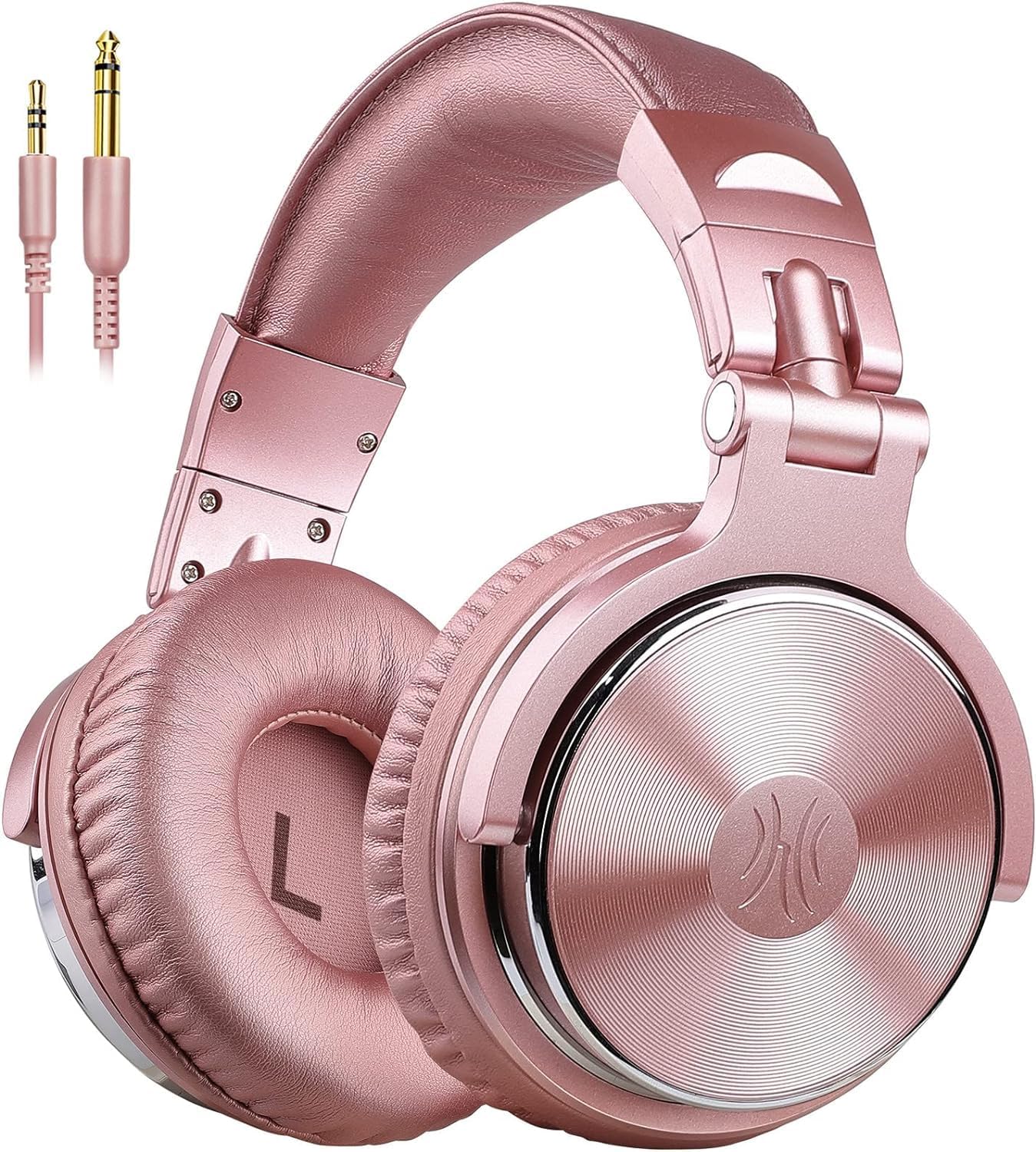
10OneOdio Wired DJ Hi-Res Over-Ear Headphones for PC
The OneOdio Wired DJ Over-Ear Headphones in the pink finish are the value pick for bass-lovers. The listing highlights large 50 millimeter drivers with neodymium magnets for dynamic bass, aimed at DJing, mixing, monitoring and music listening. This model makes the list because it brings big drivers and a long cord to an affordable level, with a color option that stands out from most studio gear. It is a friendly way to get big sound on a smaller spend.
The long 9.8 foot DJ-style cord is detachable, and the box includes both a standard 6.35 mm plug and a 3.5 mm plug, so you can plug into a mixer, a keyboard, a TV or a stereo without hunting for an adapter. The ear cups swivel 90 degrees for single-ear monitoring. The headband is adjustable and stretchable, and the soft padded cushions are meant to offer monitor headphone comfort and noise isolation.
Casual listeners, young musicians, gamers on a PC and DJ hopefuls make up the main audience. The long cord reaches from a TV or stereo to a chair, which suits home theater and keyboard practice alike. The listing says it works with any device that has a 3.5 mm or 6.35 mm jack. Fans of a bold look will like the pink color, and the single-ear swivel helps when you need to chat while playing.
Understand what you are buying. A bass-heavy character can be fun for pop and hip-hop, yet it may hide detail for careful mixing. Compare it with a flatter monitor if you plan serious production work. A long cable gets tangled easily, so wind it up after use. Build quality at this level will differ from premium studio models, so handle the hinges gently. Keep your volume at a safe level to avoid ear fatigue.
Large 50 mm drivers
Detachable long cable
Both plug sizes included
Fun color option
Bass focus is less neutral for mixing
Long cord can tangle
How to Choose the Studio Headphones
What Makes a Studio Headphone Different
A studio headphone is built to show you what is in the recording, not to make it sound more exciting. Consumer pairs often boost bass or treble to please the ear, while studio models aim for a more even balance so you can judge a mix. That does not mean they sound dull. Many of the models in this guide still have a lively tone, and they add comfort, durable parts and long cables for working sessions.
Studio headphones also tend to be wired. A cable removes battery worries, avoids wireless delay and keeps the signal simple. Many include a 1/4-inch adapter for interfaces and mixers. Replaceable pads and cords are common too, which matters because pro gear is used for hours daily. When you shop, read the listing for driver size, cable type, design style and any notes about the equipment it is meant to connect with.
Open-Back, Closed-Back and Semi-Open Explained
Closed-back headphones seal the outside of each cup. They block more noise from the room and keep sound from leaking out, which is vital for recording vocals or working near others. Examples in this guide include the ATH-M50X, the DT 770 Pro, the MDR7506 and the HD 280 Pro. The trade-off is that the sound can feel a bit more enclosed, with a smaller sense of space around instruments.
Open-back headphones let air and sound pass through the cups. They usually sound wider and more natural, which helps with mixing and critical listening, but they leak sound and let outside noise in. The DT 990 Pro and HD 599SE are open designs here, and the AKG K240STUDIO is semi-open, sitting in the middle. Choose by room: closed for recording and noisy spaces, open for quiet mixing and relaxed listening.
Impedance and Why It Matters
Impedance, measured in ohms, describes how much the headphone resists the electrical signal. Lower numbers are easier to drive from weak sources like phones and laptops, while higher numbers usually want a stronger source such as an audio interface or headphone amp. The beyerdynamic listings make this very clear: the 250 ohm DT 990 Pro needs an interface or amp for full volume, while the 80 ohm DT 770 Pro is described as loud enough from most laptops.
Do not treat impedance as a quality score. A higher number is not better by itself. It is a match issue between the headphone and your gear. If you plan to mix at a desk with an interface, a high-impedance model can work well and may offer headroom. If you plan to use a laptop, a phone and a keyboard, an easier-to-drive pair avoids low volume and thin sound. Check any listing for impedance before you buy.
Driver Size and What It Tells You
Driver size is the diameter of the speaker element in each cup, usually listed in millimeters. In this guide the listings mention 30 mm, 40 mm, 45 mm and 50 mm drivers. A larger driver can move more air and may support stronger low frequencies, but size alone does not decide how a headphone sounds. Tuning, magnets, voice coils, enclosure and pads all play a part in the final result.
That is why a 40 mm model can sound more neutral than a 50 mm model, and why a 30 mm semi-open design can sound clear and open. Use driver size as one clue, not as the full answer. Read how the maker describes the tuning, such as enhanced low frequencies or an extended range with accurate bass, and match that to your goal. Mixing work usually calls for a flatter balance than casual listening.
Comfort for Long Sessions
Comfort often decides whether you actually use a pair of headphones. Look for soft pads, a headband that spreads pressure and a weight that does not strain your neck. Velour pads, found on the beyerdynamic models and the Sennheiser HD 599SE, feel soft and breathe well. Leather style pads usually seal better for isolation but can feel warmer. Replaceable pads are a big plus because worn cushions are the most common point of failure.
Clamping force and head size matter too. Some people have narrow heads or wear glasses, and a tight fit can cause pressure after an hour. Swiveling cups, adjustable bands and self-adjusting headbands, which show up in several picks here, help find a better fit. Take short breaks during long sessions, rest your ears and keep the volume moderate. Comfortable headphones also help you make better mixing choices because you are not rushing to finish.
Cables, Plugs and Adapters
Almost every studio headphone ships with a 6.35 mm (1/4 inch) plug or adapter for pro gear and a 3.5 mm (1/8 inch) plug for phones and laptops. Cable length varies a lot. Several models here quote about 3 m or 9.8 feet, which is handy at a desk. A coiled cord stretches and returns, while a straight cord is lighter and can tangle less when you move around.
Some listings say the cable is fixed, like the Sony MDR7506 and the beyerdynamic models, while others have detachable cables, like the OneOdio models and the HD 599SE. A detachable cable makes repairs and swaps easy. A fixed one is simple and sturdy but needs care. Check plug types against the gear you own, and keep a spare adapter, since small screw-on parts are easy to lose.
Isolation and Tracking vs Mixing
Tracking means recording a singer or instrument while listening to a backing mix. For that job you want closed-back headphones with strong isolation, so the sound does not bleed from the cups into the microphone. The DT 770 Pro, the HD 280 Pro with its up to 32 dB attenuation figure, the ATH-M50X and the MDR7506 are well matched to this task. Good isolation also helps in noisy homes and shared offices.
Mixing and mastering are different. Here you want to hear balance, stereo width and fine detail, and you are usually alone in a quiet room. Open-back models like the DT 990 Pro and HD 599SE are popular for this because of their wider image. Many engineers own one of each type, tracking with closed-backs and mixing with open-backs. If you can only buy one pair, closed-back is the safer all-round choice.
Matching Headphones to an Audio Interface or Amp
A headphone is only one part of the chain. An audio interface converts sound between your computer and your gear, and its headphone output feeds the pair you wear. A basic interface can drive most low and mid impedance models well. A dedicated headphone amp adds more power and can help with high impedance models like the 250 ohm DT 990 Pro. Check the interface specifications and read the headphone listing together.
If you only have a laptop jack, choose an easier-to-drive model and consider a small interface later. Avoid turning up the computer volume to the maximum to compensate, because that can add distortion and risks your ears. Set your interface to a comfortable level first, then adjust gently. A decent source often makes a bigger difference than an expensive headphone on a weak output, so budget for both.
Safe Listening Habits
Studio work can mean hours of focused listening, so safe volume is part of good practice. A common rule is to keep levels moderate, take a short break every hour and avoid maxing out the volume to hide room noise. Closed-back headphones with strong isolation help here, because you can listen at a lower level when outside noise is blocked. Never use loud levels to fight a noisy room for long.
Set your volume while the quietest part of your music is playing, then leave it there. If speech sounds muffled after listening, or you notice ringing, stop and rest. Do not rely on any headphone to protect you, since the level you choose is what counts. This guide shares general good habits, not medical advice, so see a professional if you have any worries about your ears.
Value, Warranty and Replacement Parts
Studio headphones can last for years, and the parts that wear first are the pads, the headband padding and the cable. Models with replaceable parts, like the Sennheiser HD 280 Pro and the beyerdynamic DT range, can be repaired for a fraction of the cost of a new pair. This long life is why many people choose a pro model over a trendy consumer pair, even when the sound seems similar at first.
When you compare costs, check the live listing since prices change. An affordable model can be a sound way to learn, while a step-up model may add comfort, a better fit and a longer service life. Check the warranty terms on the listing, keep the box and read what is included in the package. A simple upgrade in pads or a new cable can also refresh an older pair.
Who Should Buy Which Pair
If you want one pair that does most jobs, start with the Audio-Technica ATH-M50X. If you record vocals, look at the beyerdynamic DT 770 Pro or the Sennheiser HD 280 Pro. If you mix in a quiet room and own an interface, the DT 990 Pro or Sennheiser HD 599SE are good open-back options. Travelers and editors may like the foldable Sony MDR7506.
Beginners with a smaller budget can look at the ATH-M20x, the OneOdio A71 or the pink OneOdio model. The A71 is handy if two people need to share audio. The AKG K240STUDIO suits creators who like a lighter, semi-open sound. Before you decide, list your room, your source gear and your main task. That short list will narrow the field faster than any spec sheet.
Frequently Asked Questions
What are the best studio headphones for beginners?
The Audio-Technica ATH-M50X is our top overall pick, and the ATH-M20x is a simpler entry-level option. Both are closed-back monitors designed for tracking and mixing. Pick the one that fits your budget, and pair it with a basic audio interface.
Should I buy open-back or closed-back studio headphones?
Closed-back models isolate better and suit recording and noisy rooms. Open-back models usually give a wider, more natural image, which suits mixing in a quiet room. If you can only buy one pair, closed-back is the safer all-round choice for most people.
Do studio headphones need an amp?
Not always. Low impedance models work from laptops and phones. High impedance models, such as the 250 ohm DT 990 Pro, need an audio interface or headphone amp for full volume according to the listing. Check impedance before you buy.
Can I use studio headphones for gaming or music?
Yes. Many studio models make fine music and movie headphones, and some work for gaming through a wired jack. You will need a separate microphone for voice chat on most of them, since these designs do not include a built-in mic.
What is impedance and why does it matter?
Impedance, measured in ohms, shows how much the headphone resists the signal. Lower values are easier to drive from weak sources, and higher values suit interfaces and amps. It is about matching your gear, not about quality on its own.
Are wired headphones better than wireless for studio work?
For most studio tasks, wired is preferred. A cable avoids battery use and wireless delay, and it keeps the signal simple. Delay matters when recording, so wired closed-back models are a common choice among home producers and podcasters.
How long do studio headphones last?
With care, a good pair can last for years. The pads, headband padding and cable wear first. Models with replaceable parts, like the Sennheiser HD 280 Pro and the beyerdynamic models, can be refreshed instead of replaced, which extends their life.
Which studio headphones are best for recording vocals?
Closed-back designs with strong isolation, such as the beyerdynamic DT 770 Pro, the Sennheiser HD 280 Pro and the Audio-Technica ATH-M50X, help prevent sound from leaking into your microphone. Open-back models are a poor fit for this job because they leak sound.
Can I share audio with a friend on these headphones?
The OneOdio A71 has a shared audio port that lets a second pair connect without splitters, according to the listing. For other models, you would need a splitter. Keep the combined volume comfortable when two pairs are connected.
How do I listen safely with studio headphones?
Keep the volume moderate, take regular breaks and avoid raising the level to cover room noise. Isolating closed-back headphones help you listen at lower levels. If you notice discomfort or ringing, stop and rest your ears.
The Bottom Line
The Audio-Technica ATH-M50X is the best studio headphone for most people thanks to its balanced mix of drivers, isolation, swiveling cups and durable build. If you record, look at the DT 770 Pro or HD 280 Pro, and if you mix in a quiet room, the DT 990 Pro is a strong open-back choice.
Beginners can start with the ATH-M20x or a OneOdio model and upgrade later. Check live listings for current prices, match impedance to your gear and keep your listening volume safe.
Updated for the 2027 buying season. Amazon listings and availability change often, so check the product page for current details.
Write Your Review
No reviews yet. Be the first to share your experience!