

As an Amazon Associate we earn from qualifying purchases. If you buy through links on this page we may receive a commission at no extra cost to you. Product details come from Amazon listings and can change.
Searching for the best open back headphones for the train sounds simple, but it comes with a catch that most shopping pages skip. Open-back designs let air and sound pass through the ear cups. That gives music a roomy, natural feel, yet it also means people nearby can hear what you play, and the rumble of the carriage reaches your ears too. This guide is written with that trade off front and center.
We cover eight picks from the product data: five true open-back models, plus three open-ear designs that keep your ears uncovered in a different way. The guide is for commuters, students and travelers who ride quiet carriages, travel off peak, or want a listening style that keeps them aware of announcements. If you ride a packed rush hour service every day, a sealed design will usually serve you better, and we say so plainly.
Prices change often, so we do not quote them here. Each pick links to a live listing where you can check the current offer, colors and availability before you decide. Read the quick answer first, then jump to the product that matches your commute.
Our top pick is the Audio-Technica ATH-AL5NC, a wireless open-back model that folds flat and lists up to 75 hours of playback. The Sennheiser HD 599 is the comfort choice for long quiet rides, and the Philips SHP9500 is a good value wired option. Remember that all open-back models leak sound and let noise in.
Key Takeaways
Best Open Back Headphones For The Train at a Glance
| Product | Our score | |
|---|---|---|
| 8.4 / 10 | Check Price → | |
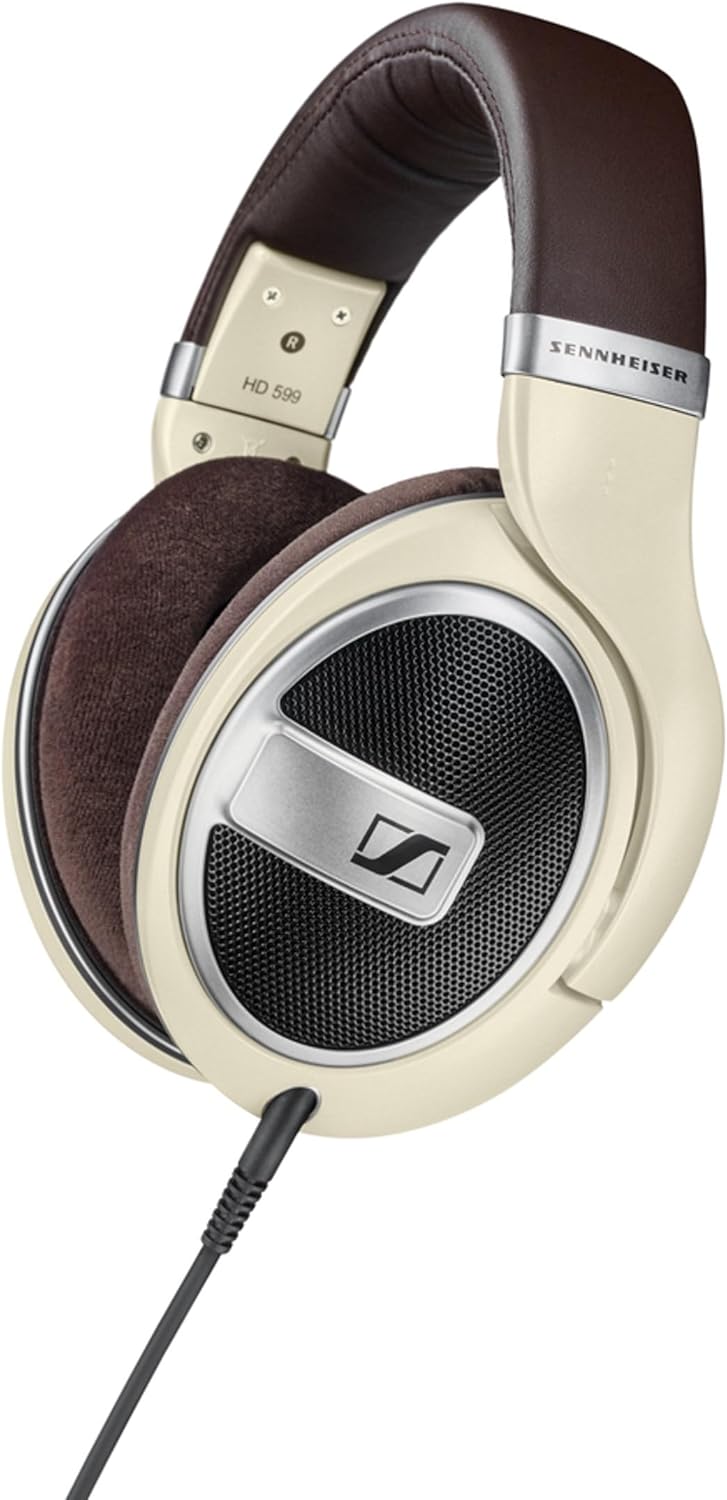
Sennheiser HD 599 Open-Back Wired Audiophile HeadphonesBest for Comfort
|
9.2 / 10 | Check Price → |

Sennheiser HD 560S Open-Back Over-Ear Wired Audiophile HeadphonesBest for Sound Detail
|
9.0 / 10 | Check Price → |
| 9.2 / 10 | Check Price → | |

Moondrop Old Fashioned 40mm On-Ear Headphone with 0.78mm 2pinBest Compact On-Ear
|
9.2 / 10 | Check Price → |

Open-Ear HeadphonesBest Open-Ear Over-Ear
|
8.6 / 10 | Check Price → |

Open Ear Headphones with MicBest for Calls
|
8.4 / 10 | Check Price → |

Soundcore V20i by Anker Open Ear EarbudsBest Open-Ear Earbuds
|
8.8 / 10 | Check Price → |
How We Chose the Best Open Back Headphones For The Train
This is a research based guide, not a lab comparison. We built each pick from the details in the product listings, the stated specs and features, and well known facts about how headphones work. We then asked one question: how well does this design suit a train journey, given that open-back and open-ear products share the same weakness of sound leakage and limited noise blocking?
Because the keyword asks for open-back models, we put true open-back headphones first and added open-ear alternatives for readers who mainly want awareness of their surroundings. Every pick carries an editorial score out of 10 on the site, which reflects fit to this use case, listed features, comfort details and practical limits. A higher score does not mean a model is right for everyone.
In-Depth Reviews
1Audio-Technica ATH-AL5NC Wireless Open-Back Headphones

The Audio-Technica ATH-AL5NC takes the top spot because it solves the biggest practical problem with open-back headphones on public transport: the cable. Most open-back models are wired, which means a lead snaking from your phone to your head. This pair is wireless, so you can sit, stand or shuffle along the platform without tugging anything. It is still an open design, so the usual cautions apply, but it is the most travel ready model in this group.
The listing describes specially designed 53 mm dynamic drivers aimed at pure, natural sound, with open-back housings that improve airflow and reduce heat. A larger driver generally helps with bass weight and dynamic range, while the open housing lets sound waves escape instead of bouncing around inside the cup. That is why open-back headphones often feel airy and wide. The same airflow also explains why leakage and outside noise are part of the deal.
Who is it for? Think of a commuter who rides at quieter times, works from a shared office, or wants a pair for the sofa that can also come along on a trip. The listing mentions spatial awareness, which suits people who want to hear station announcements. The battery claim of up to 75 hours of continuous playback means a week of daily rides could pass without a charge, though real results depend on volume and use.
Some practical points before you buy. The flat folding design and included carrying pouch help protect the headband and ear cups in a bag, so use them. Keep the volume modest on a train, because raising it to beat carriage noise will also push more sound out to your neighbors. The model name includes NC, so read the listing carefully to see exactly what that covers, and do not expect a sealed cup level of isolation from an open shell.
Wireless freedom without a cable
Long listed battery life
Folds flat with carry pouch
Airflow helps reduce heat
Leaks sound to nearby riders
Lets carriage noise in
2Sennheiser HD 599 Open-Back Wired Audiophile Headphones
The Sennheiser HD 599 earns its place as the comfort pick for riders who want a classic open-back sound on a quiet service. It is a wired, around-ear design with an ivory finish, brown headband stitching and matte metallic details. The listing positions it as premium audiophile gear, and the shape of the ear cups is meant to sit around the ear rather than press against it, which many listeners find easier over long sessions.
The listing highlights a padded headband and velour covered ear pads that give no pressure on the ears. Velour is soft and breathable, so it tends to stay more comfortable than leather style pads on warm days. The transducers use aluminum voice coils, and the listing says they deliver high efficiency, strong dynamics and very low distortion. High efficiency matters because it means a phone or laptop can usually drive the headphones without a separate amplifier.
Two cables ship in the box according to the listing: a robust 3 meter detachable cable with a 6.3 millimeter jack, and a 1.2 meter detachable cable with a 3.5 millimeter jack. For the train, the shorter lead is the one to pack, since the long cable is better suited to a desk or living room. This model suits a calm journey on a quiet line, a long coach ride with few passengers, or a lunch break in a station waiting room.
Be realistic about the trade offs. The large open ear cups are not a pocket item, and the cable means you need a phone with a headphone jack or a small adapter. Sound will reach people sitting close by, so choose a seat with some space and avoid high volume. If the carriage is loud, you will hear the rumble and chatter mixed into your music, which is normal for any open-back headphone.
Soft velour pads
Padded headband
Short and long cables included
Efficient drivers
Bulky for small bags
Wired only, leaks sound
3Sennheiser HD 560S Open-Back Over-Ear Wired Audiophile Headphones
The Sennheiser HD 560S is the pick for readers who treat their commute as listening time and want accurate, detailed sound. The listing describes a natural, accurate reference sound that reveals the truth in your music, along with lifelike depth from open-back ear cups that let sound waves expand naturally. In plain terms, this is a pair built to show you what is in a recording rather than flatter it with heavy bass.
Several features explain that character. The listing mentions ergonomic acoustic refinement that tilts the drivers to the natural angle of your ears, which helps create a wide soundstage. A new polymer blend transducer membrane is said to give highly linear excursion for superb control, and the low end is described as extended with clear bass performance. These are the traits that make reference style headphones popular for critical listening and for mixing basics.
The connector listed is 1/4 inch, which is the larger jack common on audio equipment. For a phone you will need a small adapter, so plan for that before your first ride. This model fits a student with a quiet study commute, a creator who wants to check a mix on the move, or a music fan who rides at off peak hours and values detail over isolation. Detail shines with well recorded albums rather than low bitrate streams.
Here is the honest caveat. A pair designed for accuracy and openness will let crowd noise and train rumble blend into the music, so quiet passages can get masked. It will also leak sound at moderate volume, which is awkward in a silent carriage. Use it where you can sit without people right beside you, keep the level comfortable, and take breaks so your ears are not working hard for hours.
Accurate reference style sound
Wide soundstage design
Clear and controlled bass
Well suited to detailed music
Needs adapter for most phones
Poor fit for crowded carriages
4Philips Audio SHP9500 HiFi Precision Stereo Over-Ear Headphones

The Philips SHP9500 is the value choice here, a wired over-ear pair with an open acoustic system that has been a familiar name among first time open-back buyers. The listing calls it a HiFi precision stereo headphone, and the specs it gives are simple and clear: 50 mm neodymium drivers, an open acoustic system, and gold-plated connector finishing. It is a sensible starting point if you want to learn what open-back sound is about.
Large 50 mm drivers are the headline feature, and the listing says they deliver a full spectrum of sound. Neodymium magnets are a common choice because they are strong yet light, which supports good efficiency. The open design lets the rear of the driver breathe, which often gives a spacious feel with less boxy resonance than a sealed cup. A double layered headband cushion and breathable ear cushions are listed for longer wearing comfort.
One detail deserves attention. The listing describes the 1.5 m cable as giving freedom of movement for indoor use. That wording is a useful clue: this pair is designed with home listening in mind. On a train it can work if you sit down and keep your phone close, but it is less handy than a wireless model when you are standing or moving between carriages. It rewards patient listening at a gentle level.
If you plan to commute with it, treat it as a seated, quiet hour companion. Coil the cable neatly, avoid snagging it on seat arms, and keep the volume low enough that the person beside you is not part of your audience. Because the cups are open, outside announcements and track noise will mix in, so it suits patient listening rather than escaping a loud journey. Keep a spare adapter if your phone has no jack.
Large 50 mm drivers
Breathable ear cushions
Simple wired setup
Gold-plated connector
Cable aimed at indoor use
Sound leaks and noise gets in
5Moondrop Old Fashioned 40mm On-Ear Headphone with 0.78mm 2pin
The Moondrop Old Fashioned is the unusual entry in this list, an on-ear open-back design with a retro look. Instead of surrounding the ear, the cups rest on it, which usually makes for a smaller, lighter shape than a full size around-ear model. The listing describes premium sound quality with classical comfort and timeless tones, so it is aimed at listeners who like a vintage feel as much as the sound.
The technical story starts with a 40 mm large dynamic driver and a high damping coefficient diaphragm, which the listing says is optimized for an open-back soundstage. Damping helps control unwanted vibration in the diaphragm, which can keep music tidy. The pair uses a 3.5 mm jack and a 0.78 mm 2pin interchangeable cable, so you can swap in another compatible lead, including shorter ones or different lengths. Compact size makes it easy to slide into a coat pocket or small bag.
Fit is a strong theme in the listing. It mentions an ergonomic fit with a telescopic headband and multi axis swivel hinges, plus a modular design where the ear cups and headband are detachable. Tinkerers will like that idea. For the train, the smaller on-ear size is easier to carry than a big around-ear pair, and a wired 3.5 mm plug suits phones and players that still have a jack.
On-ear designs press against the ear, so check comfort over a full journey rather than a quick listen, and look for a way to adjust the headband. As with every open-back model, music will be audible to people close by and the carriage will be audible to you. Pick a quiet service, keep the volume friendly, and treat it as a personal listening pair rather than a way to block the world out.
Compact on-ear shape
Detachable 2pin cable
Adjustable telescopic headband
Modular detachable design
On-ear pressure can tire some ears
Open design leaks sound
6Open-Ear Headphones
This Open-Ear Headphones model is for readers who like the idea of open-back freedom but want a wireless pair built for daily travel. The listing calls it an open-ear over-ear design with ambient sound pass-through, an unblocked ear fit, and awareness of traffic, announcements and surrounding sounds. It is not a classic audiophile open-back, but it shares the same open philosophy and suits the same commuter mindset. Pair it before leaving home so the first ride is smooth.
The listing says soft, breathable ear cushions and an adjustable lightweight headband aim to give pressure-free comfort after hours of wear. It also lists high-quality dynamic drivers with a built-in microphone for hands-free calls, a two hour full charge, and up to 20 hours of continuous playback. Taken together, that is a practical feature set for a commuter who wants music, a few calls and a quick top up before heading out.
Portability is a selling point. The listing mentions a lightweight, foldable body that is easy to stash in a backpack or purse, and a matte finish with silver accents aimed at teens, casual users and gift buyers. Students riding a bus or train to school, and adults who want to stay aware at the station, are the natural audience. It is also easy to use at a desk or in a library corner.
Keep expectations grounded. Open-ear designs let outside sound in by intent, so a loud carriage will compete with your music, and some audio will reach nearby seats. Bass can feel lighter than on a sealed pair because there is no seal to hold it in. If you value calm focus on a noisy line, this is the wrong tool, but for safe awareness and comfort it makes sense. Matte finishes can show marks, so a pouch helps.
Wireless and foldable
Stays aware of announcements
Built-in microphone for calls
Quick two hour charge
Bass is lighter without a seal
Sound spills into the carriage
7Open Ear Headphones with Mic
The Open Ear Headphones with Mic come from a different corner of the market than the true open-backs above. They use an open ear, air conduction design, so small speakers sit near the ear canal without sealing it. The listing stresses all-day comfort without pressure inside the ears, and situational awareness while working, driving, walking or exercising. For a train rider who spends part of the trip on calls, that mix has real appeal.
The feature list is call focused. A microphone system is described for clear voice pickup, and a one-touch mute control helps with meetings and classes. Dual device connection lets you pair two devices at once, so a laptop and phone can both stay linked and you can switch between a call and music. The listing also names upgraded 16mm drivers for balanced sound with clear vocals, and Bluetooth 5.4 with a range up to 49 feet.
Battery and weight are the other headline numbers. The listing claims up to 10 hours of talk time and playback on a single charge, and a weight of 29 g. A very light build helps comfort over a long ride, especially for people who dislike anything pressing on the ear. Office workers, remote staff and students who juggle a laptop and phone on the way to work make up the core audience.
There are limits worth knowing. Air conduction speakers cannot match the depth of a full size driver, and in a loud carriage the music may feel thin. Others nearby can hear sound at higher volume, which is awkward on a quiet train. Use it for podcasts, calls and light listening at modest volume, and keep a sealed pair on hand for noisy days. Light weight and a mute button make it a tidy fit for meeting heavy mornings.
Very light 29 g build
Dual device connection
One-touch mute button
Bluetooth 5.4 pairing
Music can sound thin in noise
Some sound leakage at volume
8Soundcore V20i by Anker Open Ear Earbuds
The Soundcore V20i by Anker brings open-ear listening to a true wireless earbud form. Rather than blocking the ear canal, the buds sit just outside it, which the listing says gives matchless comfort for all-day wear. It is the most pocket friendly pick in this group, so it makes sense for riders who find big headphones awkward on a packed carriage or who do not want to carry a case-less headband.
Several listed features stand out. The listing mentions four adjustable positions that rotate to help you find a secure and comfy fit, 16mm drivers with titanium-coated domes, and BassUp technology aimed at rich, resonant bass. For calls, four microphones and an AI algorithm are described as delivering crisp, clear voice. There are also customizable lights that sync with music, a playful extra that suits younger buyers. The lighting effects can be a talking point with friends.
Situational awareness is the central promise. The listing says you stay connected to the world around you, which helps when you need to catch a platform announcement or hear a conductor. That makes them a fit for city commuters who walk, cycle and ride the train in one trip, and for anyone who finds in-ear tips uncomfortable. They are less of an audiophile pick and more of an everyday companion.
Plan around the physics. With no seal, outside sound always mixes with your music, and bass has less punch than on a sealed pair. Higher volume may also spill into the seats beside you. Try each of the adjustable positions until the buds sit steady, keep the level moderate for ear comfort, and bring a sealed alternative for very loud routes. Small size also makes them easy to lose, so keep them in a set pocket.
Compact and pocket friendly
Four adjustable fit positions
Four mics for call clarity
Comfortable open-ear style
Little bass punch without a seal
Easy to hear outside noise
How to Choose the Best Open Back Headphones For The Train
Why open back headphones sound different
Open-back headphones have grilles or vents on the outer face of each ear cup. Sound produced at the rear of the driver can leave the cup instead of bouncing around inside, which avoids the boxy buildup that sealed cups sometimes have. Many listeners describe the result as airy, wide and natural, as if the music is in the room rather than inside the head.
The cost of that openness is simple physics. Air and sound travel in both directions, so what you play can be heard by people nearby and what is around you reaches your ears. Open-back designs are therefore loved at home, in studios and in quiet offices, and they are a niche choice on public transport. Understanding that trade off is the first step to buying well.
Will people hear my music on the train
Yes, at many volume levels they can. Open-back headphones leak sound, and the effect grows as you turn the volume up. In a quiet carriage with seats close together, a neighbor may hear a faint version of your tracks even at moderate levels. That is the main reason many commuters avoid open-back models on busy services. If you share a seat bench, the problem becomes more obvious.
A few habits reduce the problem. Choose a seat with a gap beside you, keep the volume low, and choose music with quiet dynamics rather than heavy bass. Some people use open-ear models for podcasts or calls, which have less bass energy to leak. If you ever notice a fellow passenger looking your way, treat it as a hint to turn the level down.
How much train noise gets in
Quite a lot. An open design does not block sound, so wheel rumble, brake squeal, announcements and conversations all mix with your music. A sealed pair presses against the head to form a barrier, and active noise cancelling adds electronics to reduce steady low frequency noise. Open-back headphones offer neither, so they cannot hide the sound of a moving train.
This is not always bad. Some riders like hearing station announcements and approaching trains, and the mixed sound can feel more natural for long journeys. The downside is that quiet music gets masked, so you may be tempted to push the volume up. Resist that urge, since higher levels increase leakage and are not kind to your ears over time.
Which journeys suit open back headphones
The best fit is a quiet, seated journey with room around you. Think of early morning or late evening services, long distance coaches with few passengers, quiet carriages where talking is discouraged, and waiting rooms. In those settings the open sound is a pleasure and the leakage is easy to manage because few people are close. Match each trip to the right pair before you pack your bag.
They are a weaker fit for rush hour, standing room only carriages, buses with loud engines, and underground lines with high noise. In those cases a closed-back model, or earbuds with noise cancelling, will usually give a better experience. If one pair has to serve both roles, consider owning a second sealed pair for loud days. Match the route to the headphones before you pack your bag.
Wired or wireless for travel
Wired open-back headphones are common because they allow simple, low latency, high quality sound without batteries. The drawback on a train is the cable. It can snag on seats, bags and your own elbows, and many phones no longer include a headphone jack. A short detachable lead helps, and an adapter may be needed for larger connectors. Whichever you pick, store the pair in a case between trips.
Wireless models remove the cable problem and, in the case of the ATH-AL5NC here, offer a long listed battery claim. Bluetooth does add a slight delay and depends on the codecs both devices support, such as SBC or AAC, but for music and podcasts that is rarely an issue. Weigh convenience against the extra charging step and choose what fits your routine.
Open-ear and bone conduction alternatives
If your real goal is to hear announcements and traffic, open-ear designs may fit you better than a full open-back. Air conduction models, over-ear open designs and open-ear earbuds all keep the ear canal free. They are lighter, often wireless, and easier to carry, which suits the daily commute better than a bulky audiophile pair. Bone conduction suits sport better than long seated rides.
Bone conduction models, which send vibration through the cheekbones, are a related idea popular for running and cycling. They sit outside this list because the keyword asks for open-back headphones, but the same logic applies: awareness is high, isolation is low, and detail and bass are modest. Match the design to your journey rather than chasing a label. Read each description closely to see how the sound reaches your ear.
Comfort over a long ride
Comfort matters more on a train than on a short walk, because you may wear the same pair for an hour or more. Open-back designs help here. The airflow keeps ears cooler, and many models use soft velour or breathable fabric pads instead of sealed leather. A padded headband and moderate clamping force prevent hot spots at the crown and sides of the head.
On-ear models such as the Moondrop Old Fashioned rest on the ear and can feel tight to some people, while around-ear shapes spread the weight better. Glasses wearers should check that the pad design does not press the frame into the temple. If possible, wear your chosen pair for a full hour at home before trusting it for a long trip.
Battery life and charging on the move
Wired headphones never run out of power, which is a quiet advantage on a long journey. Wireless ones need charging, and published battery figures are best treated as ideal case numbers. Higher volume, a weaker signal and extra features can all shorten a charge, so give yourself a margin when planning a trip. Treat stated hours as a ceiling rather than a promise.
Look at the listing for charging speed as well as capacity. A quick top up of a couple of hours before you leave can be as useful as a huge number on paper. For long travel days, pack a short USB-C or similar cable and a small power bank, and switch the headphones off when you stand up so they do not drain idly.
Calls and microphones on public transport
Taking calls on a train is harder than at home because of background noise. Open-ear products with built-in microphones, like the Open Ear Headphones with Mic and the Soundcore V20i, are designed for this, using multiple microphones and sometimes AI processing to focus on your voice. Results vary with the carriage, so keep calls short in noisy places. Quiet carriages are the easiest places to be heard clearly.
True open-back headphones from the audiophile world usually have no microphone at all. That is fine for music, but it means you will fumble with your phone for calls. If calls matter on the way to work, lean toward a wireless open-ear model, and be considerate of other passengers by speaking quietly or texting instead. Always check the live listing to confirm microphone details.
Listening volume and ear care
Open-back headphones feel lower in volume than sealed ones in a noisy place, and that can tempt you to turn them up. A safer habit is to set the level in a quiet room first and then leave it alone. If you can hear the carriage over your music, accept it rather than pushing the volume higher. Moderate listening sessions are easier on the ears and on neighbors.
General guidance from health bodies is to keep personal listening at moderate levels and take regular breaks. We make no medical claims, but sensible volume is a low cost habit that pays off in comfort and in being a good neighbor. Many phones include a volume limit or listening alert in settings, which is worth switching on for daily commutes.
Carrying and protecting open-back headphones
Open grilles are more exposed than sealed shells, so protect them. Fold flat or fold in the cups if the design allows it, and use the pouch or a hard case if you have one. Keep the headphones away from sharp keys, drinks and the bottom of a crowded bag. Rain and dust can also reach the driver more easily.
Bring a short cable if your model is detachable, and wrap it loosely to avoid kinks. Wipe pads with a dry cloth after a sweaty journey and let them air out rather than sealing them in a bag. A little care helps the pads stay soft and the headband keep its shape for years of regular travel. Good storage habits will keep the finish looking fresh.
Who should skip open back headphones
Skip them if you regularly travel on loud, crowded or underground services, if you need to block a noisy world to concentrate, or if you often ride in silence where leaking sound would annoy people. In those cases a sealed pair or noise cancelling earbuds is the better tool, and no amount of careful volume control will change the basic design.
Also skip them if you mostly want a single pair for the gym, the street and the office. The open sound shines in calm, seated settings, and that is a narrower job than many buyers expect. Treat an open-back model as a second, special pair and you will enjoy it far more. Be honest about your usual route before you spend money.
Frequently Asked Questions
Are open back headphones good for the train?
They can be good on quiet, off peak journeys where you sit with some space around you. They are not a good fit for loud or crowded carriages, because they leak sound and let outside noise in by design.
Will people sitting near me hear my music?
Often yes, especially if you turn the volume up. Open-back headphones leak sound by design. Keep the level low, choose a seat with a gap beside you, and prefer podcasts or light tracks in quiet carriages.
Do open back headphones block train noise?
No. They do not seal the ear and do not offer active noise cancelling in the classic sense, so rumble, announcements and chatter will mix with your music. Closed-back or noise cancelling models are better for loud routes.
Which pick is best overall for commuting?
The Audio-Technica ATH-AL5NC is our top pick because it is wireless, folds flat and lists up to 75 hours of playback. It still leaks sound, so use it on quieter services rather than packed rush hour trains.
Can I use wired open back headphones with my phone?
Yes, if your phone has a headphone jack or you use an adapter. Some models, such as the HD 560S, use a larger connector and need a small adapter. Efficient headphones usually work fine straight from a phone.
Are open-ear headphones the same as open back?
No. Open back refers to vented ear cups that cover or sit on the ear. Open-ear designs keep the ear canal free using small speakers or conduction, and they are lighter, but they share the same low isolation.
What volume is safe on the train?
Keep volume moderate and take breaks. A good approach is to set a comfortable level in a quiet room, then avoid raising it in noisy places. Many phones offer a volume limit setting that you can switch on.
Is a wired or wireless pair better for travel?
Wireless is easier to move around with and avoids snagging cables. Wired avoids charging and can give excellent sound for the money. Pick wired for seated, calm journeys and wireless for varied, active commutes.
Can I take calls with these headphones?
Only the open-ear models in this guide list microphones. True audiophile open-back pairs like the HD 599 and HD 560S are listening only. Keep calls short in noisy carriages and speak quietly.
Should I buy a second pair for loud days?
If you ride mixed services, a sealed or noise cancelling pair is a smart companion. Use the open-back model on quiet days and the sealed one when the carriage is loud, rather than forcing one pair to do both.
The Bottom Line
The best open back headphones for the train are the ones that match a quiet, seated journey, and our top pick is the Audio-Technica ATH-AL5NC for its wireless freedom, flat folding design and long listed battery life. For comfort choose the HD 599, for detail the HD 560S, and for value the SHP9500.
If your commute is loud or crowded, treat any open design as a second pair. Check live listings for current offers and specs before you buy, keep the volume friendly, and pick the model that fits how you actually travel.
Updated for the 2027 buying season. Amazon listings and availability change often, so check the product page for current details.


Write Your Review
No reviews yet. Be the first to share your experience!